A keyed lock on an apartment door is only as useful as the condition of the door, frame, hardware, and keys already in circulation. The best apartment security upgrades address those practical weak points without violating a lease, damaging property, or interfering with emergency exit requirements.
For renters, the right answer is rarely a single expensive device. It is a layered approach: confirm who has access, strengthen the entry points you are allowed to change, improve visibility, and make sure any security equipment works when you need it. Start with the front door, then consider windows, shared hallways, parking areas, and your daily routine.
Start With the Locks You Already Have
Before buying a camera or smart lock, inspect the existing lock and door hardware. Does the deadbolt extend fully into the frame? Does the door move or rattle when it is shut? Is the strike plate loose, bent, or secured with short screws? A lock can be in working order while the surrounding hardware is still easy to force.
If you have just moved in, rekeying should be one of the first security conversations with your landlord or property manager. Former tenants, contractors, cleaners, and neighbors may still have old keys. Rekeying changes the internal configuration of the lock so old keys no longer work, usually without replacing the entire lock. It is often more practical and less disruptive than changing every piece of hardware.
Ask the landlord whether the unit was rekeyed between tenants and request confirmation in writing if possible. If keys have been lost, an unauthorized person has had access, or you are dealing with a difficult roommate situation, notify management promptly. In Sacramento and nearby communities, a local locksmith can assess the lock condition and provide rekeying or lock repair when the property owner approves the work.
Best Apartment Security Upgrades That Respect a Lease
The best upgrade depends on your building rules, door construction, budget, and whether you expect to move soon. Renter-friendly options are valuable because they can often be removed without permanent damage. Still, get written approval before changing lock hardware, drilling into a door or frame, or installing equipment in a common area.
A portable door lock or door jammer
A portable door lock adds resistance from inside the apartment and is useful when you are home, sleeping, or staying in a short-term rental. A door jammer braces against the floor and door handle area to resist inward force. These devices are not substitutes for a functioning deadbolt, and they should never prevent you from leaving quickly during an emergency.
They work best on compatible inward-swinging doors with solid flooring. Test any device while you are home and keep it accessible rather than installed in a way that creates confusion during a fire or medical emergency.
A door reinforcement plate or upgraded strike plate
The latch side of the door frame is a common failure point. A heavy-duty strike plate distributes force over a larger section of the frame, especially when installed with longer screws that reach solid framing behind the jamb. This can be a meaningful improvement, but it usually requires drilling and should be handled only with landlord permission.
For apartments with metal frames, hollow-core doors, or unusual door construction, standard reinforcement hardware may not fit correctly. A locksmith can identify whether a repair, alignment adjustment, or specific hardware upgrade makes sense instead of forcing a one-size-fits-all product onto the door.
A renter-friendly smart lock
Some smart locks replace only the interior thumb-turn portion of an existing deadbolt. The exterior key cylinder stays in place, which can reduce lease concerns and allow you to reinstall the original interior hardware when you move. Features such as auto-locking, temporary codes, and activity alerts can be useful for busy households.
There are trade-offs. Battery-powered locks need maintenance, Bluetooth or Wi-Fi features can fail, and not every deadbolt is compatible. Smart access is convenient, but a physical key and a reliable mechanical lock still matter. Confirm that your landlord can access the unit for lawful emergencies and maintenance if required by your lease.
A video doorbell or entry camera
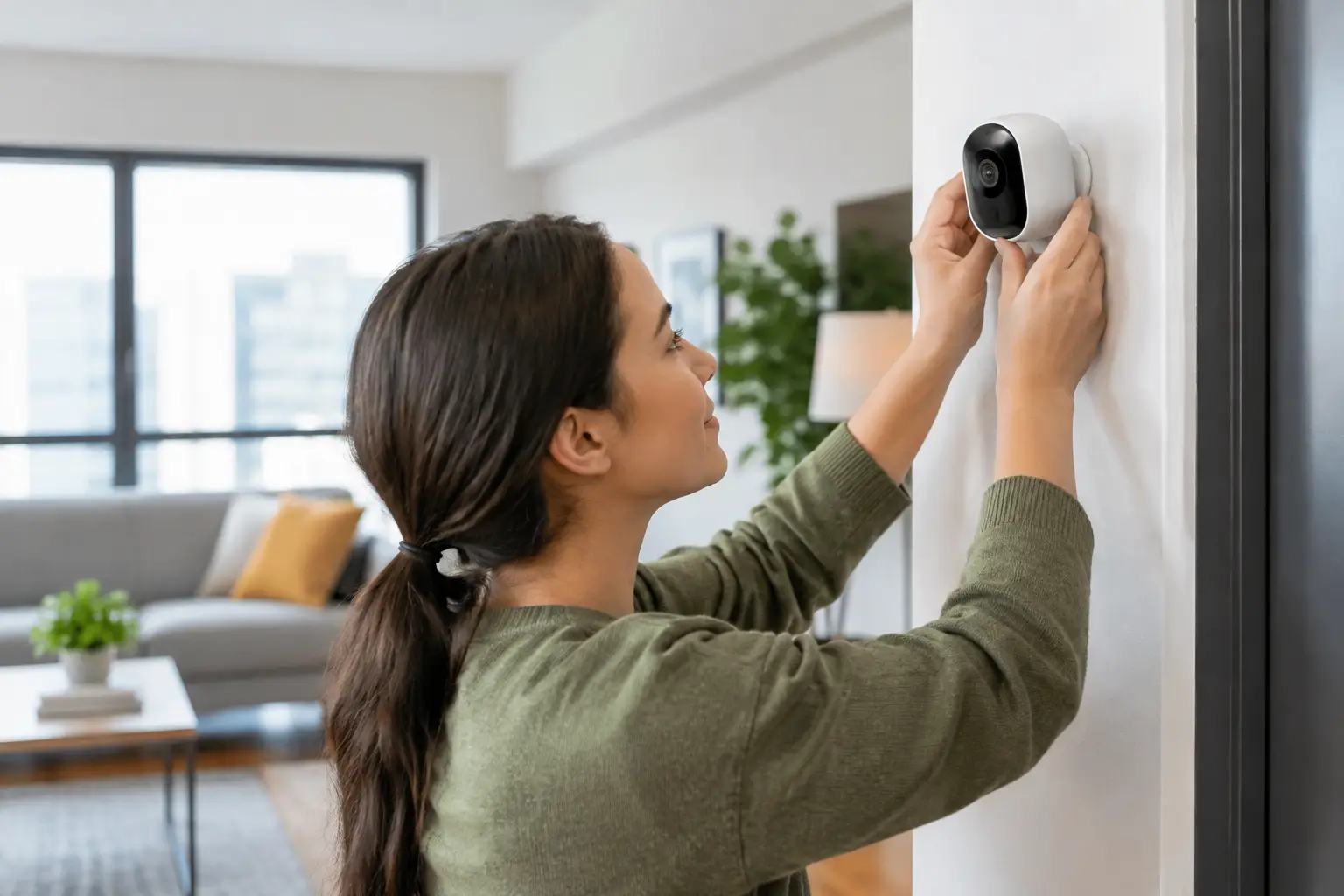
A doorbell camera can help you verify visitors, monitor package deliveries, and document suspicious activity near your private entrance. Many models use battery power and adhesive mounts, making them a reasonable option for some renters.
Privacy is the key consideration. Do not aim a camera into a neighbor's unit, through shared windows, or into areas where people reasonably expect privacy. Apartment complexes may also restrict cameras in hallways, breezeways, or other common spaces. Review building policies before installation, and position the camera narrowly toward your own doorway whenever possible.
Window locks, alarms, and privacy measures
Ground-floor windows, patio doors, and windows near stairwells deserve extra attention. First, make sure the existing locks fully engage and that the window closes squarely. A loose sash, damaged latch, or sliding door that jumps its track should be reported for repair rather than ignored.
For windows that are accessible from outside, removable window alarms can provide a loud warning if the opening is disturbed. Secondary stops can limit how far certain windows open, but they must not block a required emergency escape route. Privacy film or properly fitted curtains also prevent easy visibility into your apartment, particularly at night when interior lights make rooms easier to see from outside.
Improve Security Beyond the Front Door
Apartment security is not only about keeping a door closed. Keys, routines, shared access, and parking habits often create the bigger opportunity for trouble.
Keep track of every copy of your key and avoid hiding a spare key under a mat, planter, or nearby rock. If you need to share access with family, a dog walker, or a cleaner, use a controlled method approved by your property manager rather than leaving a key in an unsecured location. If a roommate moves out under tense circumstances, treat it as a reason to request rekeying immediately.
For vehicles, do not leave garage remotes, registration documents, spare keys, or key fobs visible inside. A thief who gets both your vehicle information and a remote may gain a clearer path to your building or garage. Park in well-lit areas when possible and report broken gates, damaged exterior lighting, or malfunctioning access doors to management without delay.
A simple apartment security routine is more effective than owning devices you rarely use:
- Lock the deadbolt every time you leave, even for a quick trip to the mailbox.
- Verify visitors before opening the door, especially when no delivery or service appointment is expected.
- Close and lock accessible windows and patio doors before leaving or going to bed.
- Report damaged locks, loose frames, failing gates, and missing keys as soon as you notice them.
When to Call a Locksmith Instead of Buying Hardware
Some problems are maintenance issues, not shopping decisions. A deadbolt that sticks, a key that turns only after repeated attempts, a door that will not latch, or a lock that was damaged during an attempted break-in needs professional attention. Forcing a worn key can leave it broken inside the lock and create a lockout at the worst possible time.
A locksmith can inspect alignment, repair or replace damaged lock components, rekey a lock after a move or lost-key concern, and explain which upgrades are compatible with the door. For renters, landlord authorization may be necessary before work begins. That protects you from lease disputes and helps ensure the property remains compliant with building and fire safety requirements.
ZM Locksmith provides residential lock repair, rekeying, and emergency lockout assistance for Sacramento-area residents who need practical help with a lock or key problem. If an entry lock has failed or your keys are no longer secure, address the immediate issue first, then build the upgrades around a properly functioning door.
The most useful security upgrade is the one you can use correctly every day. Keep the door and locks maintained, choose equipment that fits your lease and layout, and act quickly when a key, lock, or entry point no longer feels secure.