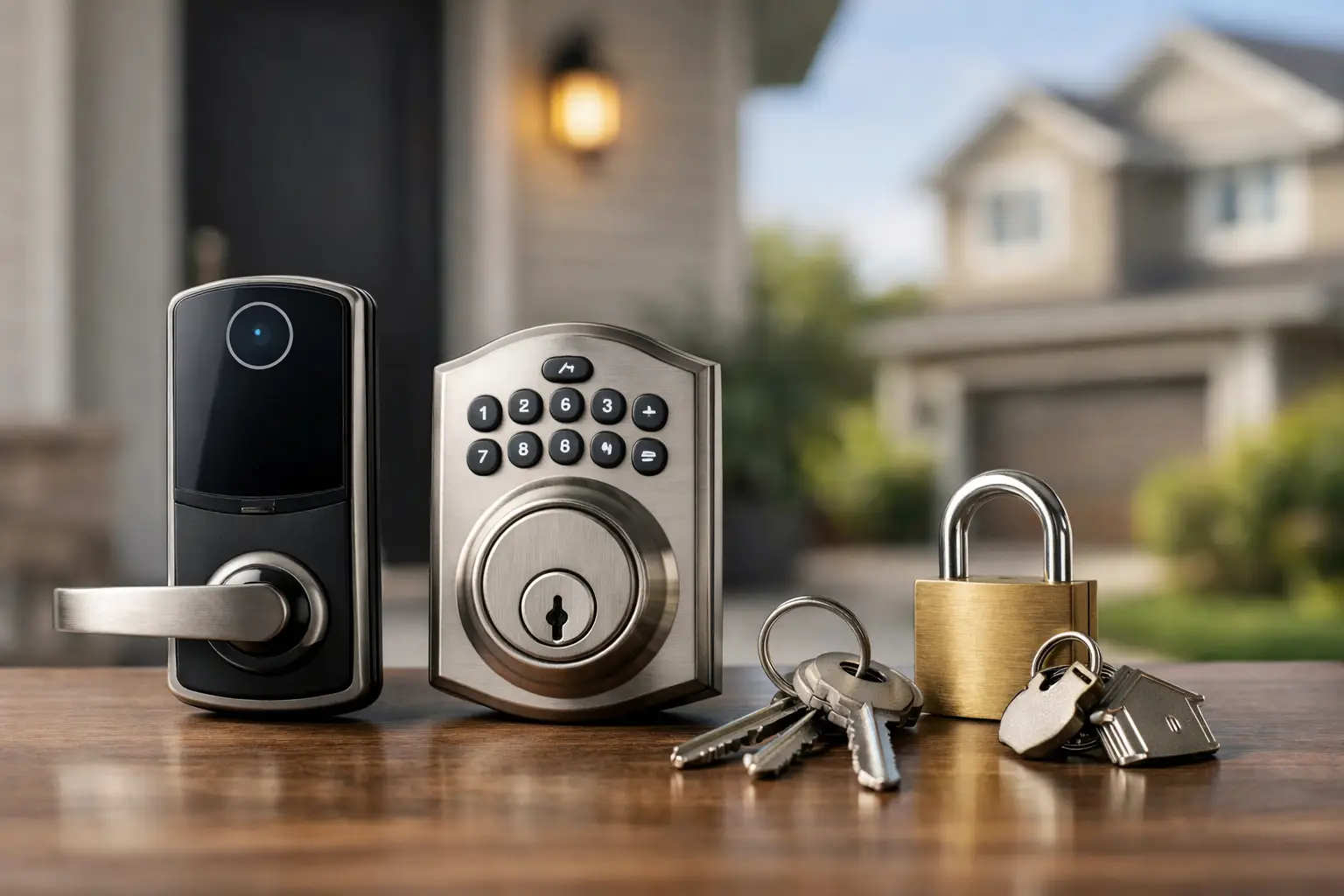
A tenant moves out on Friday, the next tenant arrives Monday, and the old keys may still be with a former roommate, contractor, dog walker, or neighbor. That is why choosing the best locks for rental properties is less about buying the most expensive hardware and more about controlling access quickly, reliably, and legally.
For Sacramento-area landlords and property managers, the right lock setup should protect the unit between tenancies, hold up to frequent use, and make turnover less costly. A lock that looks good but requires full replacement after every move-out can create avoidable expense. A smart lock that saves time but leaves a tenant unable to enter during a battery failure can create an urgent service call. The best choice depends on the property, the number of units, your management process, and local code requirements.
What Rental Property Locks Need to Do
Rental locks work harder than locks in many owner-occupied homes. Keys get copied. Tenants change. Maintenance staff need controlled access. Exterior doors face weather, daily traffic, and occasional forced-entry attempts.
Start with a quality deadbolt on every exterior entry door. A deadbolt with a one-inch throw bolt and a reinforced strike plate provides substantially better resistance than a locking doorknob alone. The strike plate matters as much as the lock cylinder. It should be secured with long screws that reach the door framing, not only the trim around the jamb.
The practical goal is straightforward: make unauthorized entry difficult, make authorized access manageable, and avoid leaving former occupants with a working key. For most rentals, that means pairing dependable mechanical security with a documented rekeying or code-change process at every turnover.
Best Locks for Rental Properties by Situation
There is no one lock that fits every rental. A single-family home, a duplex, a short-term rental, and a larger apartment building have different access needs. These are the most useful categories for most landlords.
Rekeyable Deadbolts for Standard Long-Term Rentals
A rekeyable deadbolt is often the strongest value for a conventional rental home or apartment. Rather than replacing the full lock when a tenant leaves, a locksmith can change the keying so old keys no longer work. Some systems use interchangeable cores or resettable mechanisms that can speed up this process.
This approach is reliable, familiar to tenants, and less dependent on batteries or apps. It is especially practical for landlords who manage a small number of units or prefer a straightforward key-based system.
The trade-off is key control. Physical keys can be duplicated, misplaced, and passed around. Rekeying between tenants should be a standard operating procedure, not something done only after a problem. If the property has several exterior doors, consider having them keyed alike for the manager while still maintaining secure, controlled access.
Grade 1 or Grade 2 Deadbolts for High-Use Doors
Deadbolts are commonly rated by ANSI/BHMA performance grades. Grade 1 is generally intended for the highest level of residential and commercial duty, while Grade 2 is a solid choice for many residential rentals. Grade 3 hardware may be suitable for low-use interior applications, but it is usually not the best first choice for a primary exterior rental door.
For properties with heavy traffic, multiple tenants, or doors exposed to more wear, Grade 1 or Grade 2 hardware is worth the additional cost. Look beyond the finish and the brand name. The latch, bolt, strike plate, door condition, and installation quality all affect real-world security.
A strong deadbolt installed on a weak door frame is not a complete solution. If the door is warped, the strike is loose, or the screws are short, the hardware cannot perform as intended.
Keypad Deadbolts for Easier Turnovers
Keypad locks can be an excellent option when fast tenant turnover is a priority. Instead of collecting and replacing keys, the property manager changes the entry code after move-out and provides a new code to the incoming tenant. This is useful for single-family rentals, furnished rentals, and units where vendors need occasional scheduled access.
Choose a keypad deadbolt with a physical key override, weather-resistant construction for exterior use, and a clear low-battery warning. Make sure the override key is controlled carefully. A keypad does not eliminate the need for key management if backup keys exist.
The main benefit is speed. The main risk is poor code discipline. Avoid easy codes such as unit numbers, birthdays, or repeating patterns. Do not reuse the same code from tenant to tenant. Set a written policy for changing codes after move-out, after a lost phone or credential issue, and whenever access may have been compromised.
Smart Locks for Managed Access
Smart locks are useful when a landlord or manager needs more control over who enters and when. Many allow unique codes for tenants, maintenance staff, cleaners, or contractors. Some can create temporary access windows and maintain an activity record.
They can be particularly helpful for properties with frequent vendor visits or short-term occupants. A manager can remove access remotely rather than meeting someone at the property to collect a key. That convenience can reduce missed appointments and simplify turnover.
However, smart locks are not automatically better. They require battery checks, user training, dependable configuration, and a plan for Wi-Fi or phone connectivity problems. Some systems operate locally without Wi-Fi for basic keypad entry, while others rely heavily on an app or internet connection. Before installation, decide what happens if the battery dies, a tenant changes phones, or a resident cannot access the app.
For many long-term rentals, a keypad or smart deadbolt with a mechanical key override offers a practical balance. The backup key should be stored and managed securely, not hidden outside the property.
Restricted-Key Systems for Multi-Unit Properties
A restricted-key system can help reduce unauthorized duplication in buildings with multiple units, shared entries, storage areas, or maintenance access. These systems are designed so keys are more difficult to copy through ordinary retail key-cutting services. They can also be organized into a master key system, allowing management to access designated areas while tenants have keys only for their own unit.
This setup requires careful planning. Poorly designed master key systems can become complicated and expensive to maintain. The benefit is strongest when there are many doors, multiple staff members, or a recurring concern about uncontrolled copies of keys.
A professional locksmith can map out which keys should open which doors before locks are installed. That planning prevents the common problem of ending up with a confusing ring of keys and no reliable record of who has them.
Do Not Overlook Door and Strike Reinforcement
The lock is only one part of the entry system. For rental security, inspect the door, hinges, frame, strike plate, and screws at the same time. An exterior door with damaged wood around the latch or a loose frame may need repair before a new deadbolt is installed.
Use reinforced strike plates and longer mounting screws where appropriate. On outward-swinging doors, confirm that hinges and hinge pins are protected. Sliding doors may need a secondary locking device or track security, since their factory latch alone is often not enough for a rental property.
For occupied units, any locking arrangement must also allow safe emergency exit. Avoid double-cylinder deadbolts or added devices that could prevent a resident from leaving quickly during a fire or other emergency. California and local building requirements can apply differently depending on the property and door type, so confirm code compliance before making a change.
A Turnover Process That Keeps Access Under Control
The best hardware will not solve a weak turnover process. At move-out, collect all known keys, garage remotes, mailbox keys, gate fobs, and access cards. Then rekey the mechanical locks or remove and replace every active code. Do not assume that returned keys are the only copies in circulation.
Keep a simple access record showing the lock type, keyway or code system, the date it was last rekeyed, and who has authorized access. This is especially helpful when maintenance staff, leasing agents, or multiple owners are involved.
For an emergency lockout, lost key, damaged deadbolt, or immediate rekey after a tenant change, local support matters. ZM Locksmith provides mobile locksmith service across Sacramento and nearby communities, helping property owners restore access and secure doors without delaying the next step in their turnover.
A rental lock should make the next change easier, not create another security gap. Choose durable deadbolts, control keys or codes carefully, and treat every turnover as the moment to reset access with confidence.