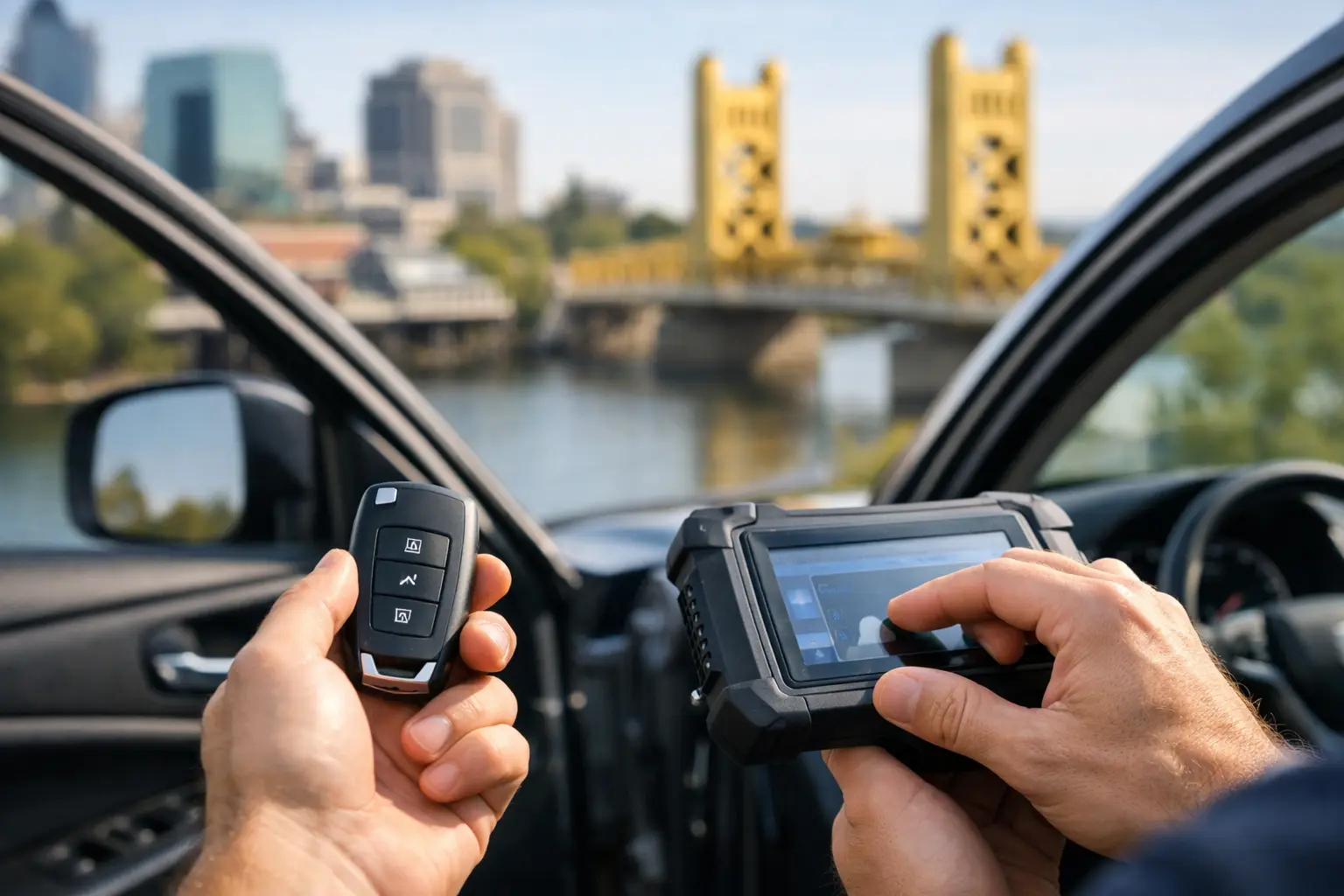
You notice the problem at the worst possible moment. Maybe your fob suddenly stops responding in a grocery store parking lot, or you have a replacement key in hand that starts the ignition but will not communicate with the vehicle. In situations like this, car key programming Sacramento drivers need is not just about making a key cut - it is about restoring secure, reliable access to the vehicle without wasting hours at a dealership.
Modern vehicle keys are built around more than the blade. Many include a transponder chip, remote buttons, proximity functions, or push-to-start authorization that must be matched to the car’s onboard system. If that programming is missing, incomplete, or corrupted, the vehicle may not recognize the key at all. That is why mobile locksmith service matters. It brings the equipment, software, and practical experience directly to your location.
What car key programming in Sacramento actually includes
Car key programming in Sacramento usually refers to pairing a new or replacement key, remote, or smart fob with a specific vehicle. Depending on the make, model, and year, the process may involve syncing a transponder chip to the immobilizer system, programming remote lock and unlock functions, or adding a proximity key for push-button start.
This is where many drivers run into confusion. A key can be physically cut correctly and still fail to start the vehicle. It can also start the vehicle but leave the remote features inactive. In some cases, an old key still works while a backup key does not. Each of those points to a different programming issue, and the fix depends on the vehicle system involved.
For Sacramento-area drivers, the practical concern is simple. You want the car to start, the doors to respond, and the key to work consistently. A professional locksmith diagnoses which part of the system is failing and programs the right component instead of guessing.
Why newer keys fail even when they look fine
A lot of key problems are not visible. The shell may be intact, the battery may be new, and the metal blade may turn normally, but the electronic communication can still fail. That happens because modern anti-theft systems rely on coded signals between the key and the car.
If the transponder chip is damaged, not programmed, or no longer recognized, the engine may crank and shut off or not start at all. If the remote board fails, lock and panic buttons may stop working even though the vehicle still starts. Smart key systems add another layer, since the car must detect the correct fob inside a specific range before it allows ignition.
There is also a common issue with aftermarket keys. Some are decent options, and some create more trouble than they save. A low-cost blank bought online may not have the right chip type, frequency, or board quality for the vehicle. That does not mean aftermarket is always wrong. It means compatibility has to be verified before programming begins.
When you need programming instead of just a new battery
Drivers often assume a dead battery is the only reason a fob stops working. Sometimes that is true. Sometimes it is not. If you replace the battery and the fob still does not respond, programming may be required.
The same applies when you already have a spare key cut. If it opens the door manually but will not start the car, the chip may never have been programmed. If you lost your last working key, the process can become more involved because the vehicle may need all old key data erased and new credentials added.
A locksmith can also help after water damage, physical breakage, or intermittent performance. Keys that work one day and fail the next should not be ignored. In many cases, that inconsistency points to a chip, board, or signal issue that will eventually leave you stranded.
Dealership versus mobile locksmith service
For many people, the first thought is the dealership. That can work, but it is not always the best fit for an urgent situation. If the car is disabled and cannot be driven, towing adds time and cost. Even when the dealership handles the programming, scheduling delays are common.
A mobile locksmith is often the better choice when speed and convenience matter. The service comes to your home, workplace, parking garage, or roadside location with the programming tools needed for many domestic, Asian, and European vehicles. That matters when you are locked out, late for work, or dealing with a family vehicle that cannot sit unusable for days.
There are trade-offs. Some high-security or very new vehicle systems may have tighter manufacturer restrictions, and in those cases the available programming path can depend on the car itself. But for many common situations, mobile service is faster and more practical than coordinating a tow and waiting in line.
Common situations that call for car key programming Sacramento service
The most common calls are not all the same, even if they sound similar at first. One driver has lost every key. Another bought a replacement fob that never synced correctly. A third has a key that starts the car but no remote entry. A fourth has a smart key that works only when held next to the start button.
These situations usually involve one of several needs: adding a spare key, replacing a lost key, reprogramming after all keys are gone, syncing a remote, or diagnosing why a key is no longer recognized. The right fix starts with identifying what still works and what does not.
That local experience matters. A locksmith serving Sacramento and nearby communities sees these issues across a wide range of vehicles and can usually identify whether the problem is the key, the fob, the ignition data, or the vehicle receiver.
What to expect during a service call
The process usually starts with vehicle identification and proof of ownership. That protects the customer and the vehicle. From there, the locksmith confirms the year, make, model, and key type, then tests the current key or fob if one is available.
If a replacement is needed, the key may be cut on site and then programmed to the car. If the issue is with an existing key, the technician may attempt reprogramming, board testing, or battery and signal diagnostics first. On some vehicles, all existing keys must be present during programming. On others, lost keys can be removed from memory for security.
The goal is not just to produce a key that works once. It is to make sure the functions are consistent, including starting the vehicle, locking and unlocking the doors, opening the trunk if applicable, and confirming proximity features on smart systems.
Local coverage matters when the problem is urgent
A key issue in downtown Sacramento feels different from one in a residential neighborhood, a workplace lot, or a suburban driveway in places like Folsom or Roseville. The solution should be just as mobile as the problem. Fast response matters more when you are stuck in the heat, blocking a parking space, or trying to secure a vehicle late at night.
That is where a local locksmith has a real advantage. Knowledge of the service area helps with response time, and mobile coverage makes it easier to reach drivers where they are instead of sending them elsewhere. ZM Locksmith is built around that kind of service - practical help on site, seven days a week, for drivers dealing with both urgent lockouts and planned key replacement.
How to avoid key programming problems later
If you have only one working key, this is the time to make a spare. Waiting until the last key is lost usually makes the process more expensive and more stressful. A backup key gives you options and reduces the chance of needing emergency service at the worst moment.
It also helps to address warning signs early. Weak button response, inconsistent starting, cracked shells, or keys that must be repositioned several times to work are signs that the problem is developing. Replacing or reprogramming before total failure is usually easier than dealing with a car that suddenly will not recognize any key.
When buying replacement keys or fobs, compatibility should be checked first. Part numbers, chip types, and vehicle-specific requirements matter. The cheapest option is not always the most usable one, especially if it cannot be programmed correctly or fails soon after setup.
If your vehicle key is acting up, the next step should be clear and practical. Get it tested, get the right key programmed, and make sure you are not relying on one failing device to get through the week.