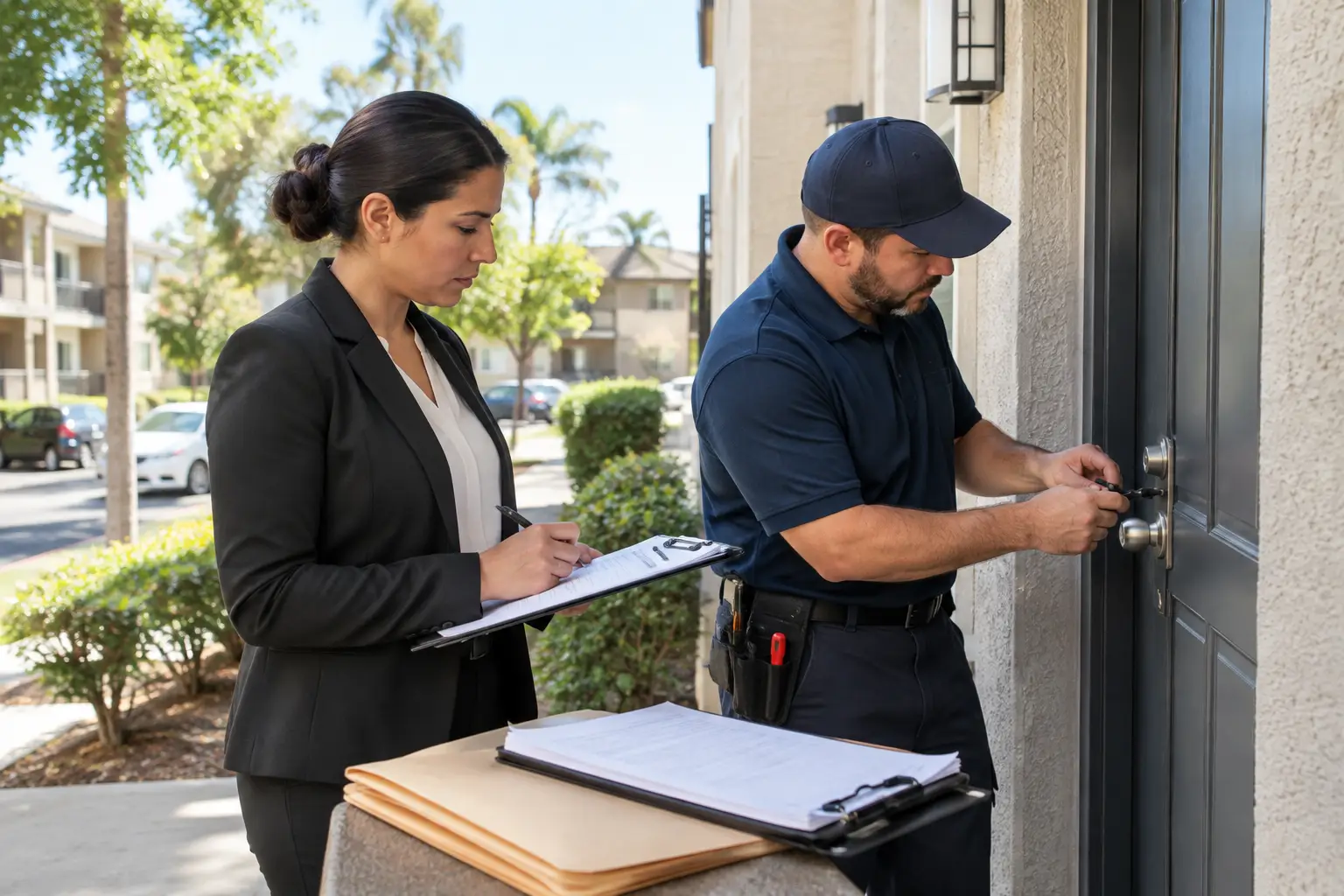
An eviction lock change is not simply a maintenance request. In California, changing locks at a rental property while a tenant still has legal possession can expose a landlord or property manager to serious claims. The lock change should happen only after possession has been lawfully returned to the owner, typically through the sheriff’s eviction process.
For Sacramento-area property managers and rental owners, the priority is clear: protect the property without creating an unlawful lockout. A qualified locksmith can help secure the unit quickly once the proper authority is in place, but cannot replace the legal eviction process.
When an Eviction Lock Change Is Lawful
A tenant does not lose possession just because rent is overdue, a lease has ended, or an eviction case has been filed. California landlords generally must follow the court process before excluding a tenant from a home or commercial space.
In a typical unlawful detainer case, the landlord obtains a judgment for possession and a writ of possession. The sheriff then serves and enforces the writ. After the required notice period ends and the sheriff restores possession to the landlord, the owner or authorized property manager can arrange an eviction lock change.
That distinction matters. A locksmith should receive clear authorization from the lawful property owner, manager, or an authorized representative who has regained possession. If there is uncertainty about who controls the unit, an active dispute, or a tenant still inside, the right step is to pause and contact the sheriff, an attorney, or the property management company.
What Landlords Cannot Do Before Legal Possession Returns
Changing locks early is often treated as a self-help eviction. California law restricts landlords from using lockouts, utility shutoffs, threats, or removal of personal property to force a tenant out without a lawful court process.
Even if a tenant has stopped responding, appears to have moved, or has not paid rent for months, assumptions can be costly. The unit may still be occupied, the tenant may still have a right to enter, or another authorized occupant may be present. A lock change before legal possession is restored can lead to damages, penalties, and a more complicated eviction matter.
Commercial properties can involve different lease terms and circumstances, but the same practical rule applies: verify the right to take possession before changing access. Do not treat a lock change as a shortcut around a dispute.
A Lockout Is Different From a Rekey After Turnover
A rekey or lock replacement after a completed turnover is normal property security work. Once the prior tenancy has ended legally and the owner has possession, changing keys protects the next tenant, staff, vendors, and the building.
An unlawful lockout happens when locks are changed to keep someone out who still has a legal right to access the property. The physical work may look identical, but the legal authority behind it is entirely different.
Documents and Information to Have Ready
A locksmith does not provide legal advice or determine whether an eviction is valid. Still, clear information helps avoid delays when the property must be secured after a sheriff-enforced eviction.
Have the service address, the name of the property owner or management company, and the name of the person authorized to approve the work. If the lock change follows an eviction, keep the relevant court and sheriff documentation available. The locksmith may also need access instructions, gate codes, a contact number for an onsite manager, and confirmation of which doors or access points must be secured.
For multifamily properties, identify whether the unit has a standard deadbolt, a smart lock, a common-area key system, mailbox locks, storage locks, or restricted-key hardware. Replacing one apartment key may not solve the whole security issue if the former occupant had keys, fobs, garage remotes, or access codes.
Rekeying vs. Replacing Locks After an Eviction
After lawful possession has been returned, property owners usually choose between rekeying existing locks and replacing them.
Rekeying changes the internal pins of a compatible lock so old keys no longer work. It is often the practical choice when the hardware is in good condition and the owner wants a fast, cost-conscious reset. It can also allow several doors to work with one new key when the hardware is compatible.
Replacing locks makes more sense when the existing lock is damaged, outdated, low quality, or not suitable for the property’s security needs. A turnover can be the right time to upgrade to stronger deadbolts, commercial-grade lever sets, keypad locks, or controlled key systems.
The best choice depends on the condition of the hardware, the number of prior keys in circulation, and the level of access control needed. For a single-family rental, a rekey may be enough. For an office, retail space, or multi-unit property, a broader access review may be warranted.
Secure More Than the Front Door
A former tenant may have had access through more than the primary entry. After a lawful eviction or confirmed turnover, inspect every point that affects property security. This includes back and side doors, garage doors, patio sliders, storage rooms, mailboxes, gates, pool areas, key safes, alarm codes, and smart-lock credentials.
For electronic access, change PIN codes, remove old users from the app, update Wi-Fi-connected lock credentials where applicable, and collect or deactivate fobs and remotes. Do not rely on the fact that a physical key was returned. Copies may exist, and electronic credentials are easy to overlook.
Property managers should also document the condition of doors and locks at turnover. Photos, key logs, and service records can help establish what was changed and when. This is useful for maintenance planning as well as future disputes.
Handling Personal Property Left Behind
Changing locks does not automatically give an owner the right to dispose of belongings left in the unit. California has procedures for handling personal property after a tenant vacates or is removed through an eviction. Those requirements can depend on how the property was recovered and how notice is delivered.
Do not use a lock change to deny access to belongings if the tenant has a legal right to retrieve them. Keep the unit secured, follow the required notice and storage rules, and get legal guidance when the situation is unclear. This protects the property owner while avoiding an avoidable dispute over personal items.
A Safer Process for Sacramento Property Managers
When an eviction reaches the final stage, timing matters. The unit may need to be secured immediately after the sheriff completes the restoration of possession, especially if there are concerns about reentry, damage, or unauthorized keys.
Confirm that possession has been lawfully returned, coordinate with the authorized onsite representative, and schedule a mobile locksmith to rekey or replace the necessary hardware. Ask for keys to be labeled and accounted for, and update the property’s key-control record before releasing access to cleaners, maintenance teams, or a new tenant.
For urgent property security needs in Sacramento and nearby communities, ZM Locksmith can assist with authorized rekeying, lock replacement, lock repair, and access restoration. The service should begin with clear authorization and a plan for securing every relevant entry point.
A properly timed lock change protects the unit, the next occupant, and the property owner’s legal position. When the facts are uncertain, wait for confirmation from the sheriff or qualified legal counsel before changing access.