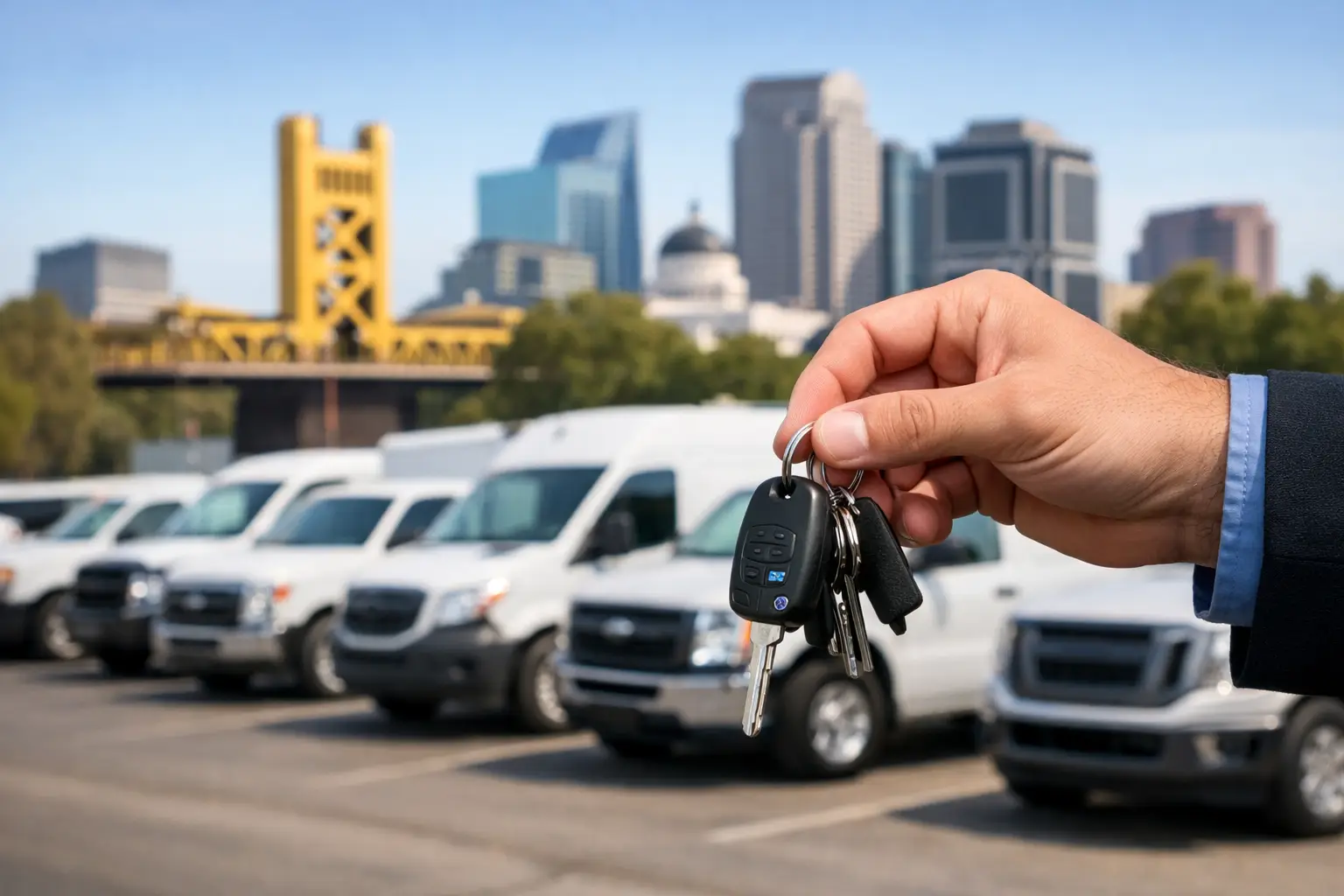
A missing fleet key can sideline more than one vehicle. It can delay a delivery route, leave a technician unable to reach a job site, disrupt a sales appointment, or expose a company vehicle to security risk. Fleet key recovery is the process of restoring access quickly while protecting the vehicle, its equipment, and the people who depend on it.
For Sacramento-area businesses, the right response depends on what happened to the key. A key locked inside a running van calls for a different service than a stolen smart key, a broken ignition key, or a key fob that suddenly will not communicate with the vehicle. The priority is the same: get the vehicle back in service without creating a larger security problem.
What Fleet Key Recovery Includes
Fleet key recovery is not simply opening a locked vehicle. A professional automotive locksmith assesses the vehicle’s make, model, year, key type, and security system before choosing the right solution. For older work vehicles, recovery may involve creating a new mechanical key from the lock or key code. For late-model trucks, vans, and SUVs, it often requires cutting a replacement key and programming its transponder chip or remote fob.
Many fleets use a mix of vehicle types and model years. A plumbing company may have older cargo vans alongside newer pickups with push-button start. A property management team may use sedans for inspections and trucks for maintenance. That variety is why a one-size-fits-all approach is unreliable. The correct equipment and programming process must match the specific vehicle.
In an urgent situation, the service may include gaining non-destructive entry, retrieving a locked-in key, making a replacement, programming it, and verifying that the vehicle starts and all remote functions work as expected. If a key was stolen or cannot be accounted for, the work should also address whether the missing key needs to be removed from the vehicle’s memory.
When a Lost Key Becomes a Security Issue
Not every lost key creates the same level of risk. If an employee misplaced a key somewhere inside a secured office, a spare key may be enough to keep the route moving. If the key disappeared at a public job site, near a vehicle marked with your company name, or during an employee separation, the situation deserves more attention.
Modern vehicle keys can contain unique electronic credentials. A replacement key may restore access, but it does not always prevent the old key from starting the vehicle. In many cases, the missing key should be erased from the vehicle’s authorized key list, then the remaining keys and new replacement should be programmed again. This step helps reduce the chance that someone who finds or keeps the old key can return and drive the vehicle later.
For a business, the decision comes down to the vehicle’s exposure, its contents, and the circumstances of the loss. A service van carrying tools, customer records, keys, or specialized equipment should be treated differently than a vehicle whose key was damaged at the driver’s home. A locksmith can explain the available options, but the company should decide the appropriate security response based on its internal policies.
A Fast Response Starts With the Right Details
When calling for fleet key recovery, having accurate information ready can reduce delays. The dispatcher or locksmith will typically need the vehicle’s year, make, model, and location. The vehicle identification number, often called the VIN, is also helpful for confirming the correct key blank or key code process.
Businesses should be prepared to show proof of ownership or authorized use. This may include registration, insurance documentation, fleet records, or identification from an authorized company representative. This protects the business and ensures that replacement keys are only made for legitimate vehicle operators.
It also helps to describe the problem precisely. Say whether the key is locked inside, completely lost, broken in the ignition, damaged by water, or stolen. If the vehicle has a push-button start, remote start, a proximity fob, or an aftermarket alarm, mention that early. Those details affect the equipment needed and whether service can be completed on site.
Common Fleet Key Problems and the Best Response
A lockout is usually the most straightforward issue. The goal is to open the vehicle without damaging the door, weather stripping, lock cylinder, or window. Forced entry may appear faster, but damage repairs can cost far more than a proper vehicle entry service.
A broken key needs a more careful approach. If part of the key is stuck in the ignition, door, or rear cargo lock, avoid pushing it farther in with another object. That can damage the cylinder and turn a key replacement into an ignition or lock repair. A locksmith can extract the broken piece and determine whether the vehicle needs a newly cut key, programming, or both.
A dead key fob battery is another frequent cause of fleet downtime. Sometimes replacing the battery is all that is needed, but not always. A fob that still fails after a fresh battery may have internal damage, lost programming, or a vehicle-side issue. Testing before ordering or programming a new fob can prevent unnecessary expense.
When all keys are lost, the process can take longer than a simple lockout because the locksmith must create and program a working key from vehicle information and onboard systems. It is still often possible as a mobile service, depending on the vehicle and its security system. The important point is not to assume a dealership tow is the only answer.
Build a Fleet Key Recovery Plan Before the Emergency
The fastest recovery is usually the one planned before a driver is stranded. Fleet managers should maintain an updated record of every vehicle’s VIN, key type, number of active keys, and the employee or department assigned to each unit. Keep this information in a secure location that authorized managers can access after hours.
A controlled spare-key policy is equally useful. Spare keys should not live loose in glove compartments, under seats, or attached to the vehicle. That may solve a short-term lockout while creating a theft opportunity. Instead, store spares in a secured office, lockbox, or monitored key cabinet, with clear sign-out procedures.
For fleets with frequent driver turnover, scheduled key audits are worth the effort. Confirm who has each key, retrieve keys promptly when employees leave, and address any missing fobs before they become a problem. This is particularly valuable for companies with shared vehicles, rotating crews, and multiple job sites.
Consider the practical balance between cost and downtime. Keeping two active keys for each vehicle requires an upfront investment, especially for smart keys and proximity fobs. But waiting until every key is gone can mean a missed service call, idle crew, towing charge, and a longer recovery process. For vehicles that generate revenue every day, a programmed spare is often a sensible operating expense.
Mobile Help for Working Vehicles
A fleet vehicle does not always fail near the office. Keys are lost at customer properties, warehouse yards, construction sites, airport parking lots, and roadside stops. Mobile locksmith service matters because it brings vehicle entry, key cutting, and many programming capabilities to the location of the problem.
For businesses in Sacramento and nearby communities, response time and clear communication matter as much as technical capability. Drivers need to know whether to remain with the vehicle, where to meet the technician, and what documents to have ready. Managers need a realistic estimate of the service needed so they can reroute work or notify customers if necessary.
ZM Locksmith provides mobile assistance for vehicle lockouts, replacement keys, and key programming when fleet access problems interrupt the workday. Availability can depend on the vehicle’s make, model, key technology, and the nature of the loss, so accurate vehicle details remain essential.
A missing fleet key should not force your business to choose between lost time and weak security. Treat the incident as both an access issue and a chance to verify who can still operate the vehicle. With the right recovery steps and a better key-control process afterward, your team can return to the road with fewer surprises.