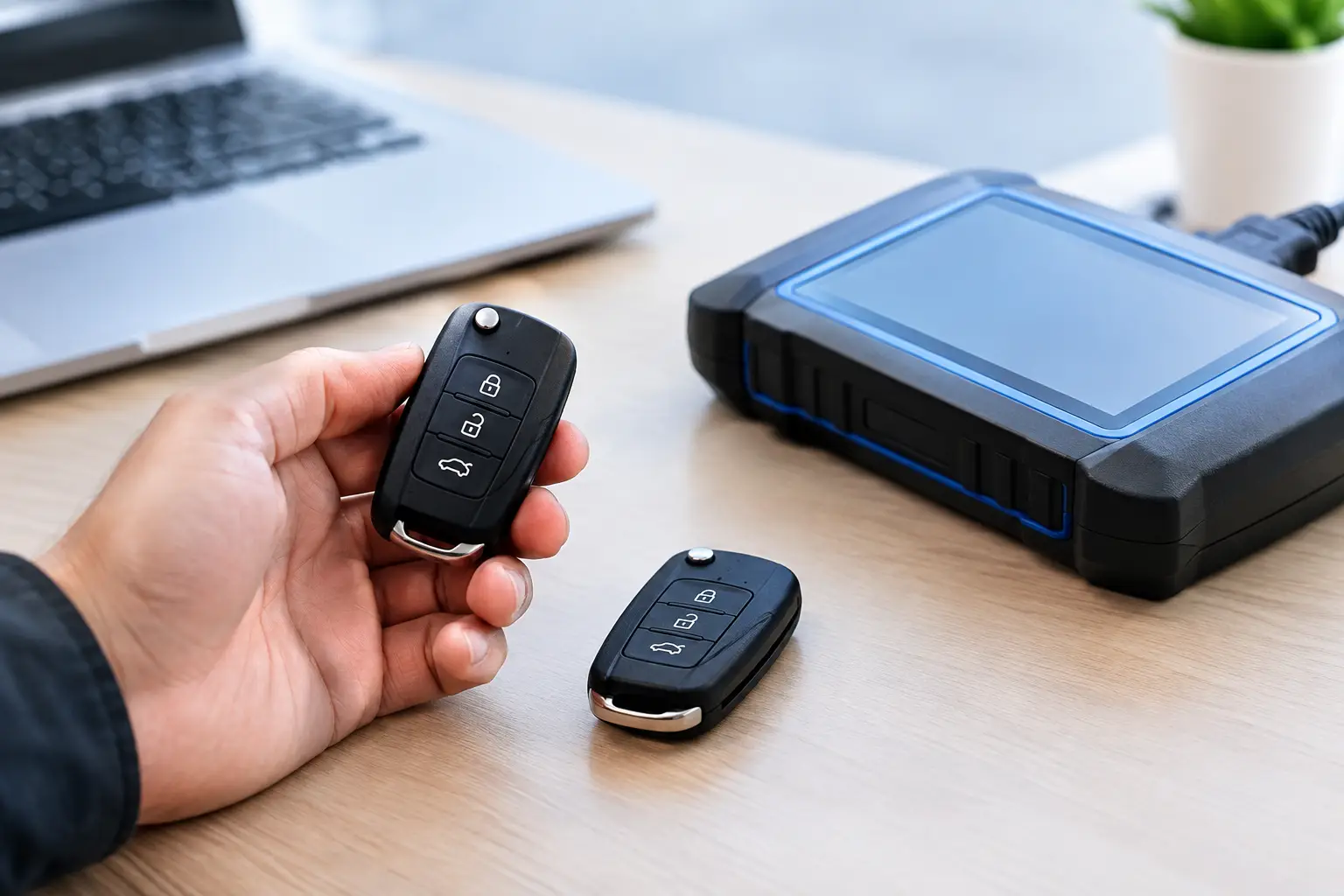
A spare key is easy to overlook until the only working key is locked inside the vehicle, lost at work, or damaged without warning. Learning how to program spare car keys can save time in some situations, but modern vehicle security makes the process more complicated than simply cutting a new key and turning the ignition.
Most vehicles made in the last two decades use a transponder chip, remote fob, smart key, or proximity system. That technology protects your car from theft, but it also means the key must communicate correctly with the vehicle before it will start. The right approach depends on your vehicle's year, make, model, key type, and whether you still have a working key.
First, Identify the Type of Spare Key You Need
Before buying a blank or attempting programming, determine what kind of key your vehicle uses. The wrong key blank, chip, frequency, or remote style will not work, even if it looks nearly identical to your original.
A basic metal key without electronics can often be cut from an existing key and used in older vehicles. A transponder key has a small electronic chip in the head. The blade may turn the ignition, but the engine will not start unless the chip is recognized by the immobilizer system.
A remote-head key combines a transponder chip with lock and unlock buttons. A key fob or smart key may not have a traditional blade at all. It communicates wirelessly with the vehicle and may allow push-button starting. Smart keys are usually the least suitable for at-home programming because they often require diagnostic equipment, secure access credentials, or both.
Check the owner's manual, look at the original key, and verify the part number before ordering a replacement. Do not rely on appearance alone. Two remotes that look alike may operate on different frequencies or use different chip technology.
When You Can Program Spare Car Keys Yourself
Some older and mid-range vehicles allow onboard programming. This means the vehicle can enter a programming mode through a sequence of ignition cycles, button presses, or door-lock actions. In many cases, you need at least one or two existing working keys to complete the process.
For example, certain vehicles allow a new transponder key to be added by inserting an existing programmed key, turning the ignition on for a specified period, removing it, and then inserting the new key. The security light may flash or turn off when programming is complete. Remote lock and unlock functions may require a separate programming sequence.
The exact process is vehicle-specific. A procedure that works for one model year can fail on the next. Follow the instructions for your exact vehicle, not a generic video or a similar-looking car.
DIY programming is most realistic when all of the following are true:
- You have at least one working master key or programmed fob.
- The vehicle supports onboard key or remote programming.
- The replacement key matches the correct chip type, frequency, and part number.
- The key blade has been professionally cut before programming begins.
Even then, set aside uninterrupted time. Leaving a door open, using a weak fob battery, turning the ignition too quickly, or missing a timing window can cause the procedure to fail. Usually, a failed attempt does not damage the car, but repeated incorrect sequences can waste time and create confusion about whether the blank itself is compatible.
How to Program Spare Car Keys: A Safe Basic Process
Start by making sure you have the correct blank and a fully charged vehicle battery. Keep every key and fob you want to use nearby. Some vehicles erase previously programmed remotes during setup, so failing to have all of them available can leave an older fob inactive.
Read the vehicle owner's manual first. Look for sections labeled keyless entry, remote transmitter, immobilizer, theft deterrent, or spare keys. If the manual provides an onboard procedure, follow every step in order and pay close attention to timing.
For a traditional transponder key, the blade must be cut accurately before programming. A key that is electronically accepted but mechanically cut incorrectly may still fail to turn the ignition or damage the lock cylinder if forced.
For a remote, replace the coin-cell battery if there is any doubt about its condition. Then complete the manufacturer-specified procedure and test every function: lock, unlock, trunk release, panic button, remote start if equipped, and engine start. If the vehicle has push-button ignition, test the fob at normal range and then close to the start button, since many vehicles have an emergency recognition location.
Do not keep retrying a random sequence if it does not work. Stop and verify the key type, vehicle compatibility, and instructions. Random programming attempts are rarely productive, especially on newer cars with encrypted systems.
Why Many Newer Vehicles Need a Locksmith
Many late-model vehicles cannot add keys through the dashboard or ignition alone. Their security systems require a professional diagnostic tool connected to the vehicle's data port. Depending on the make, the technician may also need a PIN code, security authorization, or access to manufacturer programming systems.
This is common with proximity keys, push-to-start systems, laser-cut keys, European vehicles, and many domestic vehicles with advanced immobilizers. Some models also require all keys to be erased and re-added as part of programming. That is not a job to approach casually with an unverified aftermarket tool.
A qualified automotive locksmith can cut the correct key and program it to the vehicle in one visit. That matters when your only key is missing, broken, or locked inside the car. A mobile locksmith can also verify ownership before performing service and check whether a key is communicating properly with the immobilizer.
For Sacramento-area drivers, ZM Locksmith provides mobile automotive key programming for common key types, including transponder keys, remotes, and many smart-key systems. Mobile service can be especially helpful when the car cannot start or should not be driven without a dependable working key.
Common Problems That Prevent a Spare Key From Working
The most frequent issue is buying a key that fits the ignition but has the wrong transponder chip. The engine may crank briefly or the security light may remain on, but the immobilizer will prevent starting. A remote can also operate the locks while the transponder portion remains unprogrammed, creating the false impression that the job is complete.
Another common problem is a key that was copied incorrectly. Modern key blades can have precise cuts, side milling, or high-security tracks. A hardware-store copy may not be accurate enough for a worn original key or a sophisticated lock cylinder.
Weak batteries can create inconsistent results with remotes and smart keys. So can an aftermarket fob made with poor-quality electronics. The least expensive option is not always the best value if it fails within a few months or cannot be programmed at all.
There is also a difference between programming the remote and programming the immobilizer chip. On some vehicles, these are separate tasks. You may successfully lock and unlock the doors but still be unable to start the engine. On others, a newly programmed chip may start the car while the remote buttons require an additional procedure.
Is It Better to Make a Spare Before You Need One?
Yes. The best time to get a spare key is while you still have a working original. The process is usually faster, less expensive, and less stressful because the locksmith can copy the mechanical cuts and use the existing key to help identify the correct system.
Waiting until every key is lost can turn a routine spare-key job into an all-keys-lost situation. That may require retrieving key codes, generating a new key from the vehicle's locks, programming from scratch, and clearing old keys from memory. The cost and time involved can be significantly higher.
Keep the spare somewhere secure and separate from your daily key ring. At home is usually better than in the glove box, where it is unavailable during a lockout and could create a security risk if the vehicle is stolen.
A properly cut and programmed spare is not just a convenience. It is a practical backup plan for workdays, family trips, and unexpected lockouts. If the process looks uncertain for your vehicle, having it handled before an emergency gives you one less problem to solve on the side of the road.