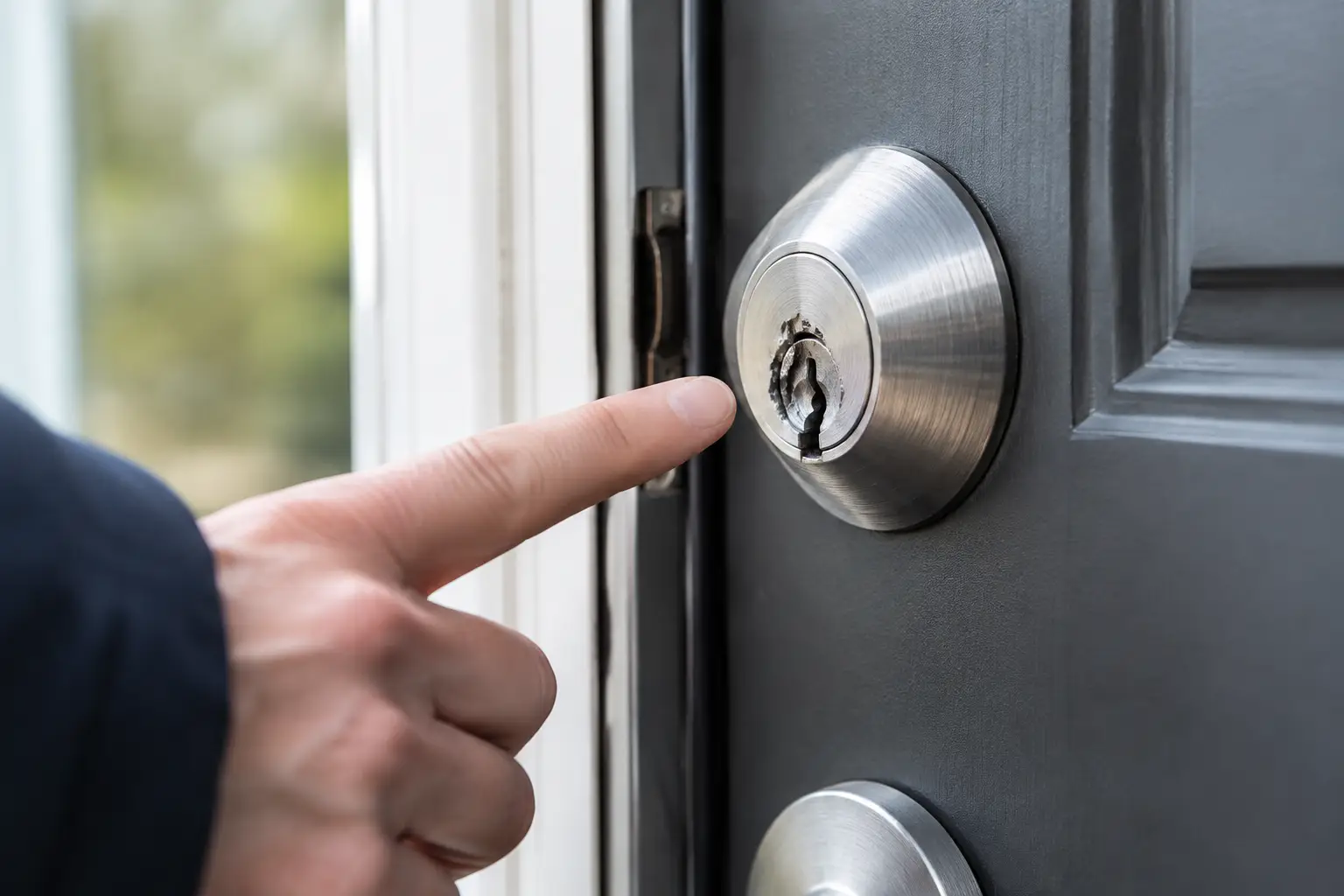
A key that suddenly sticks, a deadbolt that feels loose, or fresh scratches around a keyway can be more than a maintenance issue. These are potential lock tampering signs, and acting quickly can help protect your home, vehicle, or business before a small concern becomes a security emergency.
Not every damaged lock means someone tried to enter. Weather, normal wear, an aging key, and a rushed repair can all cause problems. The difference is often in the details: new damage, unexplained changes in how the lock operates, or signs that someone has worked around the lock rather than simply used it.
Common Lock Tampering Signs to Look For
The most visible warning is fresh scratching or gouging around the keyhole, lock face, strike plate, or door frame. A few light marks can come from everyday key use, especially on older hardware. Deep, concentrated scratches, bent metal, or marks that were not there before deserve attention.
A keyway that looks widened, damaged, or filled with debris is another concern. Someone may have inserted an improper tool, attempted to force the cylinder, or broken something off inside. Do not try to clear a damaged keyway with a paper clip, screwdriver, or lubricant if you suspect tampering. You could push debris farther in or damage the internal pins.
Pay attention when a lock starts behaving differently without a clear reason. If your key suddenly takes extra force to turn, the deadbolt does not extend fully, or the latch no longer lines up with the strike plate, inspect the area carefully. Door movement can cause alignment problems, but forced entry attempts can also bend components and shift hardware.
Other signs worth checking include:
- Loose, missing, or mismatched screws on exterior lock hardware
- A bent strike plate, split door frame, or fresh dents near the latch
- A lock cylinder that spins, pulls outward, or feels unusually loose
- Broken pieces of metal near the door, window, gate, or vehicle lock
- Damage to a smart lock keypad, camera, access reader, or door closer
For businesses, check side doors, employee entrances, storage areas, loading doors, and utility rooms - not only the main entrance. These access points can receive less daily attention and may be more appealing to someone looking for an unnoticed way in.
How to Tell Wear From Possible Tampering
Context matters. A lock that has been hard to turn for months may need routine repair or replacement. A lock that worked normally yesterday but is suddenly stiff, loose, or scratched should be treated more cautiously.
Look for changes that do not match normal use. For example, worn locks usually show gradual fading, corrosion, and light scratching from keys. Tampered locks may show sharp, recent tool marks, chipped paint around the hardware, distorted metal, or damage focused on the cylinder and latch.
Consider who has access to the property as well. If you recently moved, ended a tenancy, lost keys, had contractor access, or changed employees, the concern may not be visible lock damage. In those cases, rekeying can be the practical choice because it prevents old keys from operating the lock without requiring every piece of hardware to be replaced.
A locksmith can assess whether the issue is ordinary wear, a failed component, poor door alignment, or evidence of attempted forced entry. That distinction matters because repairing only the visible damage may leave the underlying security weakness in place.
What to Do If You Notice Lock Tampering
Start by avoiding unnecessary use of the damaged lock. Repeatedly forcing a key or deadbolt can leave you locked out or make the hardware fail when you need it most. If the door is currently secure, use another safe entrance if available until the lock can be inspected.
Take clear photos of the damage before cleaning, adjusting, or replacing anything. This can be useful for a police report, property manager, insurance claim, or internal business incident record. If you believe someone entered the property or attempted to enter it, do not disturb the area more than necessary.
For an active threat, evidence of a break-in, or a person on the property, call 911. A locksmith handles the security repair and access issue, but law enforcement should address an immediate safety situation or suspected crime.
If there is no immediate danger, arrange a prompt lock inspection. Depending on the damage, the right solution may be lock repair, rekeying, cylinder replacement, a new deadbolt, reinforcement of the strike plate, or an upgraded commercial access solution. The best option depends on the condition of the door, the lock type, and whether keys may be compromised.
When Rekeying Is Better Than Replacing a Lock
Replacement is not always necessary. If the lock hardware is in good working order but you are worried that someone has an unauthorized key, rekeying is often faster and more cost-effective. The locksmith changes the internal configuration so existing keys no longer work, then provides a new set of keys.
Rekeying is especially useful after a move, tenant turnover, employee departure, missing keys, or a security concern where there is no serious physical damage. It is not the right fix for a cracked cylinder, a bent deadbolt, stripped mounting points, or a lock that can no longer secure the door reliably.
For property managers, a consistent rekeying process between tenants helps control key access and reduces uncertainty. For business owners, it may also be time to review who has master keys, alarm codes, keypad credentials, and access to restricted areas.
Protect the Door, Not Just the Lock
A high-quality lock cannot do its job if the door frame and strike area are weak. Many forced-entry attempts target the gap between the door and frame rather than the key cylinder itself. Look for loose strike plate screws, cracked wood, warped frames, and deadbolts that do not fully enter the strike opening.
Longer screws anchored into the structural framing can strengthen many residential strike plates, while commercial doors may need more specialized reinforcement. The correct repair depends on the door material, frame construction, fire-rating requirements, and existing hardware. Improvised changes can create alignment problems or interfere with code-compliant commercial doors.
Windows, sliding doors, gates, garage side doors, and rear entrances should be included in your inspection. A secure front deadbolt does not help much if another access point is damaged, left unsecured, or protected by weak hardware.
Lock Tampering Signs on Vehicles
Vehicle locks can also show signs of interference. Scratches around the door lock, a damaged keyhole cover, a loose exterior handle, or a key that no longer turns smoothly can indicate an attempted entry. Modern vehicles may rely heavily on electronic fobs, but the mechanical door lock is still a potential target.
Avoid forcing the key if it will not turn. A broken key in the door lock can turn a concerning situation into a more complicated service call. If keys were stolen, a fob is missing, or you believe someone has access to your vehicle, ask about key programming or deleting lost keys from the vehicle system where applicable.
Get the Right Help Before the Problem Grows
A damaged lock should not be treated as something to watch for a few weeks. Security problems tend to become urgent at the least convenient time - when you are leaving for work, closing a business, or returning home after dark. Fast inspection gives you clearer answers and a chance to secure the property on your terms.
For homeowners, drivers, and businesses in Sacramento and nearby communities, ZM Locksmith can help assess damaged locks, restore secure access, rekey compromised locks, and repair or replace failed hardware. If something about your lock looks or feels wrong, trust that instinct and have it checked before you need to rely on it.