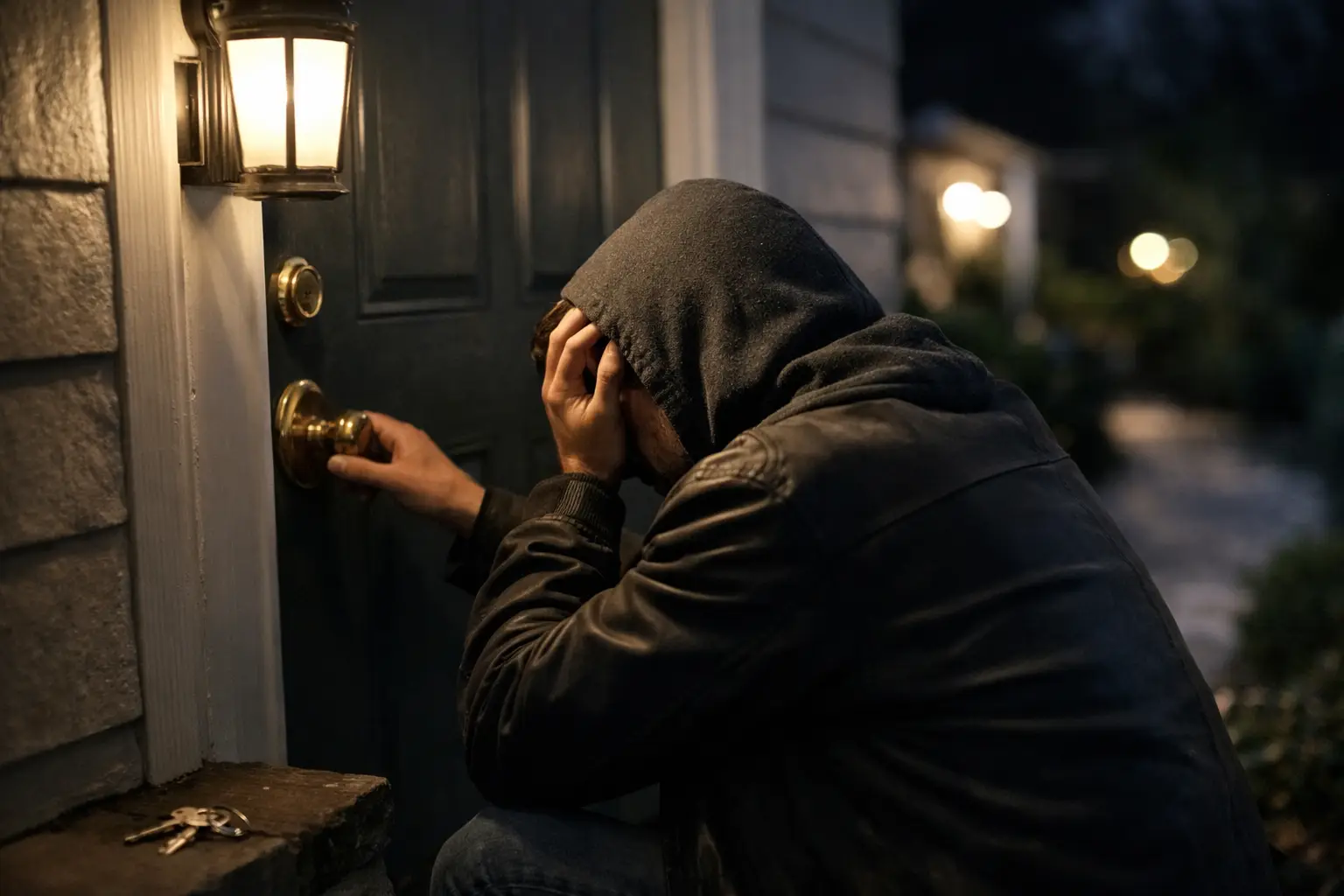
A locked door feels very different after dark. You may be tired, worried about children or pets inside, standing in poor weather, or unsure whether it is safe to wait outside. If you are locked out of house at night, the priority is not forcing your way in. Protect your safety, avoid expensive damage, and get professional help that restores access without creating a larger security problem.
Locked Out of House at Night: Start With Safety
Before focusing on the lock, take a moment to assess your surroundings. Move to a well-lit area near the home if possible. If you are in an unfamiliar neighborhood, feel unsafe, or notice anyone suspicious nearby, wait in your vehicle or a secure location such as a neighbor's porch.
If a child, older adult, pet, or anyone with a medical need is locked inside, treat the situation differently. Call emergency services when there is an immediate health or safety risk, such as a child left near a stove, an infant alone, a person needing medication, or dangerous indoor temperatures. A locksmith can restore access quickly, but urgent life-safety concerns require emergency responders.
Do not leave your home unattended with a door open, broken window, or compromised lock after gaining entry. A rushed decision can turn a lockout into a burglary risk or an expensive repair.
Check the Simple, Authorized Options First
Nighttime stress can make a simple solution easy to overlook. Check whether another exterior door, garage entry, or accessible window is already unlocked, but only if you can reach it safely and without climbing, damaging property, or entering through an unsafe opening.
If a trusted family member, roommate, nearby friend, or property manager has a spare key, contact them. This may be the quickest solution, especially if they are close by. For renters, review whether your lease provides an after-hours maintenance or lockout contact. Some apartment communities have an on-call manager, although response times and fees vary.
Smart locks can also help, depending on the setup. Another authorized user may be able to grant temporary access through the lock's app, or you may be able to use a backup code. If the lock battery has failed, however, avoid repeatedly entering codes or trying to manipulate the lock. A locksmith can assess the issue and restore access without damaging the hardware.
Avoid Damaging the Door or Lock
Trying to force a lock open is one of the costliest choices homeowners make during a late-night lockout. Kicking a door, prying a frame, removing lock hardware, or breaking a window can damage the doorjamb, deadbolt, trim, glass, weatherproofing, and the lock itself. Those repairs often cost far more than professional lockout service.
It can also leave your home insecure. A door that opens after being forced may no longer latch or lock properly. Even if you get inside, you could spend the rest of the night with a weakened entry point.
Avoid improvised lock-picking attempts as well. Online tricks are rarely appropriate for modern residential locks, and they can bend internal components or damage keyways. If you rent, unauthorized damage may also lead to charges from the property owner. The safest route is to use a qualified locksmith who has the proper tools and training to open the door with minimal disruption.
When to Call an Emergency Locksmith
If you have confirmed there is no safe spare-key option, calling an emergency locksmith is the practical next step. A mobile locksmith can come to your location, verify that you are authorized to enter the property, and choose the least destructive method for the lock and door.
A professional should be able to work with common residential deadbolts, knob locks, lever handles, keypad locks, and many smart-lock systems. In most standard lockouts, the goal is to regain entry without replacing the lock. Replacement may be necessary when the lock is damaged, malfunctioning, severely worn, or cannot be opened without compromising its security.
For Sacramento-area homeowners, dependable after-hours coverage matters because lockouts do not wait for business hours. ZM Locksmith provides emergency residential lockout help throughout Sacramento and nearby communities, including Roseville, Folsom, Elk Grove, and Rancho Cordova.
What a Professional Locksmith May Need From You
A reputable locksmith will ask for details before or upon arrival. Be prepared to provide the address, the type of door or lock if you know it, and whether there is an urgent safety concern inside. This information helps the technician arrive with suitable tools and gives you a clearer idea of what to expect.
You should also expect proof of occupancy or authorization before entry is provided. A driver's license with the address is helpful, but it is not the only option. A lease, property-management records, mail, a digital document, or verification from a landlord may be acceptable depending on the circumstances. If your identification is locked inside, explain that when you call.
Ask about pricing before service begins. Emergency service can cost more at night because of after-hours dispatch and travel, but clear communication matters. A professional locksmith should explain the service charge, likely labor, and any potential cost for replacement parts if the lock is damaged or needs to be changed.
After You Get Back Inside
Once you are safely indoors, test the door before the locksmith leaves. Make sure the key turns smoothly, the deadbolt extends fully, the latch catches correctly, and the door closes without excessive force. If the lockout happened because of a sticking lock, a broken key, or a worn key, address the cause instead of assuming it was a one-time problem.
Consider rekeying if your keys are lost, stolen, or left somewhere they could be connected to your address. Rekeying changes the lock's internal pins so the missing key no longer works. It is often a practical alternative to replacing every lock, especially after a lost keyring or a move into a new home.
If your lockout involved a smart lock, replace weak batteries and confirm that backup access works. Keep the physical backup key in a secure location away from the main entry, not under a mat, planter, or decorative rock. Those spots are well known and can put your home at risk.
Reduce the Chance of Another Late-Night Lockout
A little preparation can prevent the same stressful situation next week. Give a spare key to one trusted person who lives nearby, or store one in a high-quality secured key box installed in a discreet, appropriate location. The right choice depends on your household and security needs.
It also helps to create a simple leaving-home routine. Before closing the door, check for your keys, phone, wallet, and any required fob or garage remote. Households with multiple drivers, children, or tenants should make sure everyone knows who has spare access and what to do if the primary key is missing.
Locks deserve maintenance too. A key that sticks, a deadbolt that needs to be lifted into position, or a keypad that responds inconsistently is a warning sign. Scheduling lock repair before it fails can spare you a cold, frustrating wait outside later.
A nighttime lockout is stressful, but it does not need to become destructive or unsafe. Stay in a secure place, use only authorized access options, and rely on trained help when the door will not open. Once you are back inside, take a few minutes to strengthen your backup plan so your home remains both accessible to you and secure from everyone else.