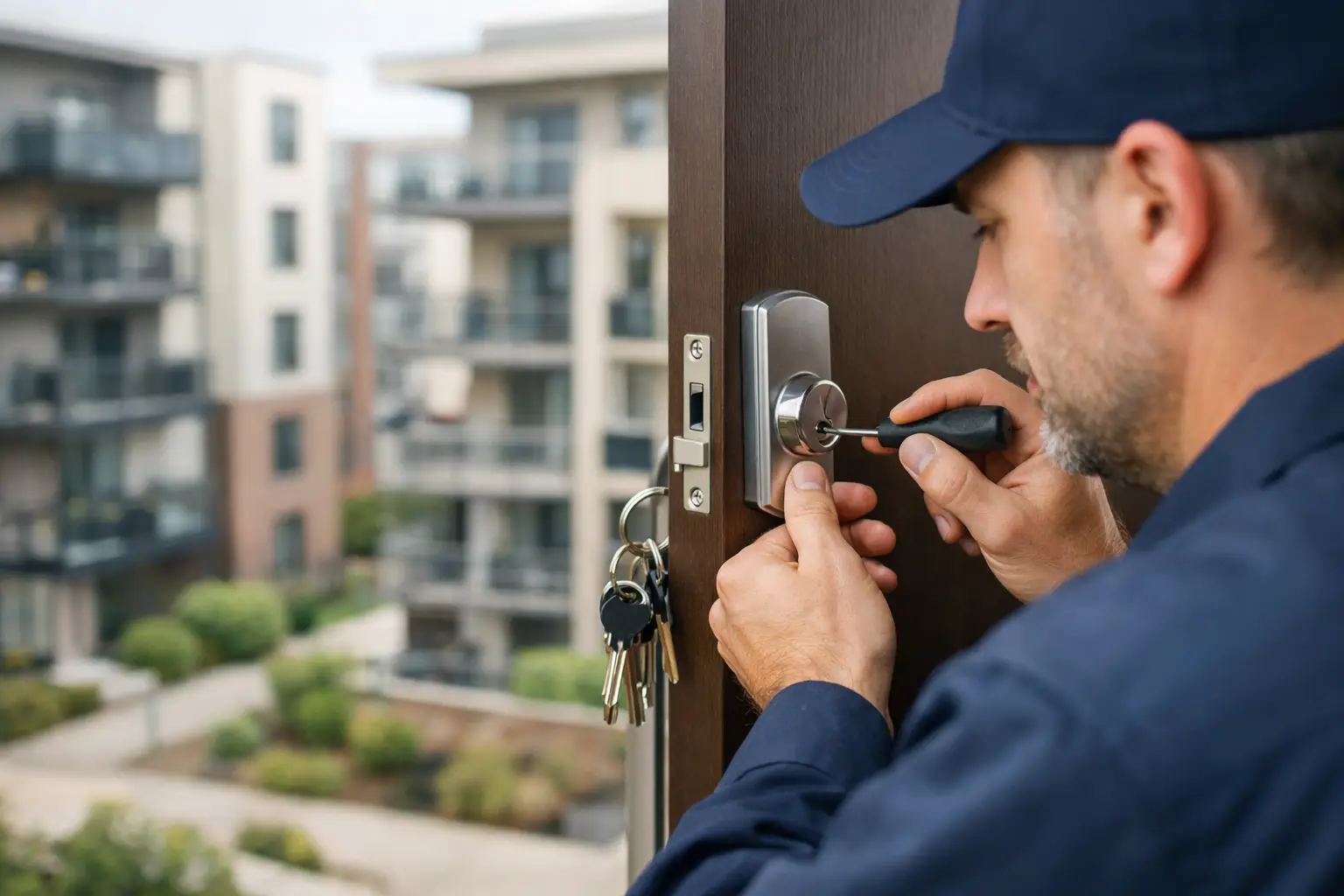
A tenant gets locked out at 9:30 p.m., a maintenance tech needs access to a vacant unit, and a front entry door is no longer latching correctly. That is exactly when a locksmith for apartment complexes becomes less of a vendor and more of an essential part of property operations.
Apartment communities deal with a different level of lock and key demand than a single home or small office. There are more doors, more users, more turnover, and more liability if something goes wrong. For property managers and owners, the right locksmith is not just there for emergencies. They help keep units secure, common areas functional, and access policies consistent across the property.
What a locksmith for apartment complexes actually handles
In an apartment setting, lock service usually goes far beyond opening a door after a lockout. A qualified locksmith may be called for unit rekeying between tenants, deadbolt repair, mailbox lock replacement, gate lock issues, office lock changes, storage room access, and master key system work. Some properties also need key duplication controls, panic hardware service, or upgrades to restricted key systems.
That range matters because apartment complexes rarely have one isolated problem. A move-out can trigger a rekey. A broken lock on a pool gate can become a safety concern. A malfunctioning front entry device can affect dozens of residents in a single day. Working with one local locksmith who can handle residential-style locks, commercial hardware, and urgent service calls saves time and limits confusion.
Why apartment complexes need a different locksmith approach
Multifamily properties create pressure that is not always obvious from the outside. The issue is not only whether a lock works. It is whether access is being managed in a way that protects residents, staff, and the property itself.
Tenant turnover is one of the biggest reasons. Each turnover raises the question of who still has copies of old keys. Rekeying is often the practical answer because it changes the working key without replacing the full lock hardware. In some cases, replacement makes more sense, especially if the lock is worn, damaged, or no longer matches the property standard.
There is also the challenge of layered access. A property may have individual units, laundry rooms, leasing offices, maintenance closets, gates, mail areas, and amenity spaces. Some should be accessible to residents, some only to staff, and some only under limited conditions. That calls for planning, not just repairs.
Emergency response is another major factor. Apartment lock problems rarely happen on a convenient schedule. A broken key in a unit lock, a tenant locked out with children inside, or a damaged entry door after an attempted break-in cannot wait for regular business hours. A responsive locksmith helps reduce downtime, complaints, and security exposure.
Rekeying and turnover service for apartment complexes
For many managers, rekeying is the service they use most. It is faster and often more cost-effective than replacing every lock after a tenant move-out. If the hardware is still in good shape, rekeying allows the cylinder to be reset for a new key while keeping the existing lock body in place.
That said, rekeying is not always the right move. If locks are inconsistent from unit to unit, badly worn, or based on low-quality hardware, replacement can create a more reliable long-term setup. Standardizing lock types across a complex can also make future maintenance easier and reduce key management issues.
A locksmith for apartment complexes should be able to assess that trade-off clearly. The cheapest immediate fix is not always the lowest-cost option over time. If a property is repeatedly paying for lock repairs on aging hardware, upgrading may be the smarter decision.
Master key systems and access control
Master key systems can be useful in apartment communities, but only when they are designed carefully. On the positive side, they help property managers and maintenance teams access authorized spaces without carrying an oversized key ring. They also bring order to a property that might otherwise rely on inconsistent key assignments.
The trade-off is that master key systems need control. If too many people have high-level access, the security benefit drops quickly. Lost master keys create bigger problems than lost tenant keys. That is why system design, documentation, and rekey planning matter as much as the physical locks.
Some apartment communities also combine traditional lock hardware with electronic access at main entries, gates, or shared amenities. In those cases, a locksmith may handle the mechanical side, the hardware installation, or troubleshooting on doors where access devices and locking components need to work together. Not every locksmith handles every electronic platform, so it is smart to ask about capabilities before a problem becomes urgent.
Emergency lockouts, repairs, and after-hours calls
When apartment properties need immediate help, the problem is usually one of three things: someone cannot get in, something will not secure properly, or a door has been damaged. Fast response matters, but so does making the right repair on site.
For example, an apartment lockout may look simple but involve a failed latch, a misaligned strike, or a key that works intermittently because the cylinder is worn out. A front door that will not close may be a lock issue, but it can also stem from the frame, closer, or hardware alignment. An experienced locksmith can identify whether the problem is truly in the lock, in the door, or in the surrounding hardware.
That distinction saves money. It also avoids temporary fixes that lead to another service call a few days later. For apartment managers, reliability after the repair is just as important as speed getting there.
Choosing the right locksmith for apartment complexes
Not every locksmith is set up to support multifamily properties well. Apartment work often requires a mix of emergency availability, mobile service, rekey efficiency, and familiarity with both residential and light commercial hardware.
Look for a provider who can handle recurring service, not just one-time calls. That includes being able to document key changes, respond to lockouts, repair or replace damaged locks, and recommend upgrades when security issues keep repeating. Clear communication matters too. Property managers need realistic arrival windows, straightforward pricing, and service recommendations that match the actual condition of the property.
Local coverage also makes a difference. A locksmith serving Sacramento and nearby communities can typically respond more efficiently than a company stretched across a much larger region. For apartment properties, that can mean less waiting during a tenant lockout or faster attention to a broken common-area lock.
Common signs your apartment complex needs locksmith service
Some lock issues announce themselves clearly. Others build slowly until they become a resident complaint or a security risk. If unit locks feel stiff, keys stick, doors stop latching smoothly, or staff are dealing with too many untracked copies of keys, it is time to take a closer look.
Frequent turnover is another sign that a property needs a standing locksmith relationship rather than occasional help. The same goes for older complexes with mixed hardware installed over many years. Those properties often end up with inconsistent keyways, mismatched lock brands, and repairs that become harder than they need to be.
If a complex has recently had unauthorized access concerns, lost master keys, tenant disputes over prior key copies, or repeated common-area lock failures, waiting usually makes the situation worse. A planned service visit can solve problems before they become emergency calls.
Building a better long-term security plan
The best locksmith support for apartment complexes is proactive. That means setting standards for rekeying after move-outs, tracking which locks serve which areas, deciding where master key access makes sense, and replacing failing hardware before it creates resident safety issues.
For some properties, the right plan is simple: regular rekeying, better documentation, and faster lock repairs. For others, it may involve upgrading entry hardware, improving key control, or reorganizing access across units and shared spaces. It depends on the age of the property, tenant turnover, budget, and how the site is managed day to day.
A dependable local provider like ZM Locksmith can be especially useful when apartment managers need both urgent help and practical ongoing support. That kind of relationship is valuable because apartment security is never a one-time project. It is part of keeping the property functional, secure, and easier to manage for everyone on site.
When locks work the way they should, residents feel safer, staff waste less time, and small problems are less likely to turn into expensive ones.