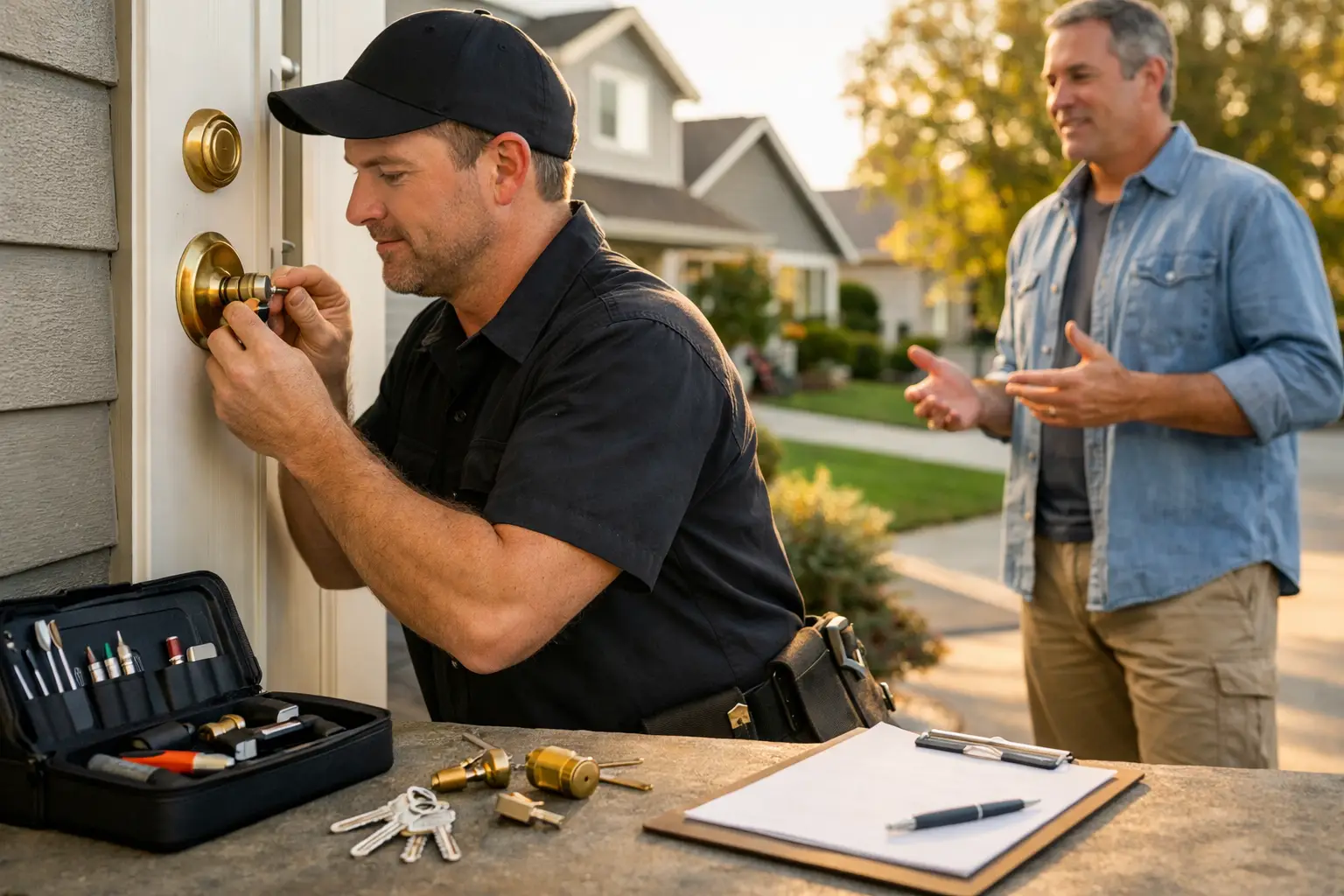
If you need to rekey house locks Sacramento homeowners rely on after a move, a breakup, a tenant change, or a lost key, timing matters. The longer old keys stay in circulation, the longer you are guessing who can still get inside. Rekeying is often the fastest way to restore control without replacing every lock on the door.
When rekeying makes more sense than replacing
Many people assume a lock problem automatically means buying new hardware. Sometimes that is true, but often it is not. If your existing locks are in good working condition, rekeying usually solves the main security issue at a lower cost and with less disruption.
Rekeying changes the internal pins of the lock so old keys no longer work. The lock itself stays in place, but it is matched to a new key. That makes it a practical option when the concern is key control rather than damaged hardware.
This is common after closing on a home, when a contractor had temporary access, or when spare keys were handed out over the years and never collected. It is also a smart step for landlords and property managers between tenants. In those cases, the lock may be fine. What is uncertain is who still has a copy.
Replacement is usually the better route if the lock is worn out, sticking badly, physically damaged, or no longer meets your security needs. If you want to upgrade from basic hardware to high-security deadbolts, smart locks, or a different finish, replacing the lock may be worth it. The right choice depends on whether you are fixing access control, hardware quality, or both.
Rekey house locks Sacramento residents commonly call for
In Sacramento, rekey requests tend to come from a few predictable situations. New homeowners are one of the biggest groups. Even if the seller turns over every key they have, there is no real way to know whether another copy exists. Realtors, cleaners, dog walkers, family members, former roommates, and contractors may all have had access at some point.
Another common scenario is a lost or stolen key. If your key disappeared with identifying information, or if you are not sure where it ended up, rekeying is usually the safer move than waiting to see what happens. The same applies after a roommate moves out or a relationship ends. Even if everything seems amicable, access should match current living arrangements.
Property managers also use rekeying to keep turnover efficient. Instead of replacing multiple locksets every time a tenant leaves, rekeying helps reset access while keeping the property ready for the next occupant. For homes with several exterior doors, this can save time and money without sacrificing security.
What happens during a house lock rekey service
A professional locksmith starts by checking the type and condition of the lock. Most standard residential deadbolts and knob locks can be rekeyed if they are functioning properly and the cylinder is serviceable. The locksmith removes the cylinder, changes the internal pin configuration, and cuts or provides a new key that matches the revised setup.
If you have multiple exterior doors, the locksmith may also be able to key them alike. That means one key can operate several locks, which is convenient for homeowners who are tired of carrying a ring full of near-identical keys. This only works when the lock brands and keyways are compatible, so it depends on the hardware already installed.
If the locksmith finds a lock that is too worn, damaged, or incompatible, they will usually explain the trade-off right there. Sometimes one or two locks can be rekeyed while another should be replaced. That mixed approach is often the most practical option, especially in older homes where hardware was changed over time.
How much it usually costs
Cost depends on the number of locks, the hardware type, and whether the job is scheduled service or an urgent call. A simple rekey for a few standard residential locks is usually more affordable than full lock replacement because you are keeping the existing hardware.
That said, the cheapest option is not always the best one. If a deadbolt is already failing or loose in the door, paying to rekey it may only delay a replacement you will need soon anyway. On the other hand, replacing perfectly good hardware just because keys are unaccounted for often costs more than necessary.
For homeowners trying to balance security and budget, the smartest move is to have the locks evaluated on site. A local mobile locksmith can tell you which locks are worth rekeying, which ones should be replaced, and whether several doors can be set to the same key.
Why local response matters for home security
House lock issues are not always full emergencies, but they can become urgent quickly. If you moved in today, lost a key this afternoon, or had a domestic access issue tonight, waiting several days to regain control of your locks is not ideal.
That is where a local Sacramento locksmith has a clear advantage. A mobile service can come to the property, inspect the doors, and handle the work without requiring you to remove hardware and bring it somewhere else. For homeowners, that means less downtime and fewer opportunities for mistakes from do-it-yourself handling.
It also helps when the home has a mix of lock types. A local technician who regularly works across Sacramento and nearby communities is more likely to see common residential hardware setups, older subdivisions with aging locks, and newer homes with builder-grade systems that may benefit from upgrades.
Rekeying after a move is one of the best first-week decisions
People often focus on boxes, utilities, and internet service during the first few days in a new house. The locks get pushed down the list because the doors seem to work and there is already a key in hand. But rekeying should be near the top.
It is one of the few services that gives immediate control over the property. You know exactly how many keys exist after the work is done, and you decide who gets them. That is a real security improvement, not just a cosmetic update.
For homes in Sacramento, Roseville, Folsom, and surrounding areas, this is especially useful when properties have changed hands multiple times or been rented before a sale. Each transition adds uncertainty. Rekeying removes that uncertainty without turning the whole project into a major hardware replacement.
Signs you should replace instead of rekey
Rekeying is effective, but it is not the answer to every lock problem. If your key is hard to turn, the deadbolt drags, the latch does not align, or the lock body feels loose, the issue may be mechanical rather than about old keys. In that case, replacing or repairing the lock may be the better call.
The same goes for visible damage after a break-in attempt. A lock that has been forced, bent, or compromised should not just be rekeyed and left in place. Security depends on the full lock assembly, not only the key pins inside it.
Some homeowners also take the opportunity to upgrade. If your current locks are basic and you want better bump resistance, stronger deadbolts, or smart lock features, replacement can make sense. Rekeying is about restoring key control. Replacement is about changing the hardware itself.
Choosing the right locksmith for rekey service
When you hire someone to work on your home security, speed matters, but so does judgment. A reliable locksmith should be able to explain whether rekeying is appropriate, identify failing hardware, and complete the work cleanly on site.
Look for clear communication, mobile service, and experience with residential lock systems. If you need broader help beyond the house, it also helps to work with a company that handles automotive, commercial, and emergency locksmith calls under one roof. ZM Locksmith serves Sacramento and nearby areas with that kind of practical, all-in-one support.
The main goal is simple. You want to know who has access to your home, you want the locks to work correctly, and you want the fix done without unnecessary delay. Rekeying is often the fastest path to that result.
If your keys are unaccounted for or your access situation has changed, taking care of it now is usually easier than dealing with the problem after it becomes urgent.