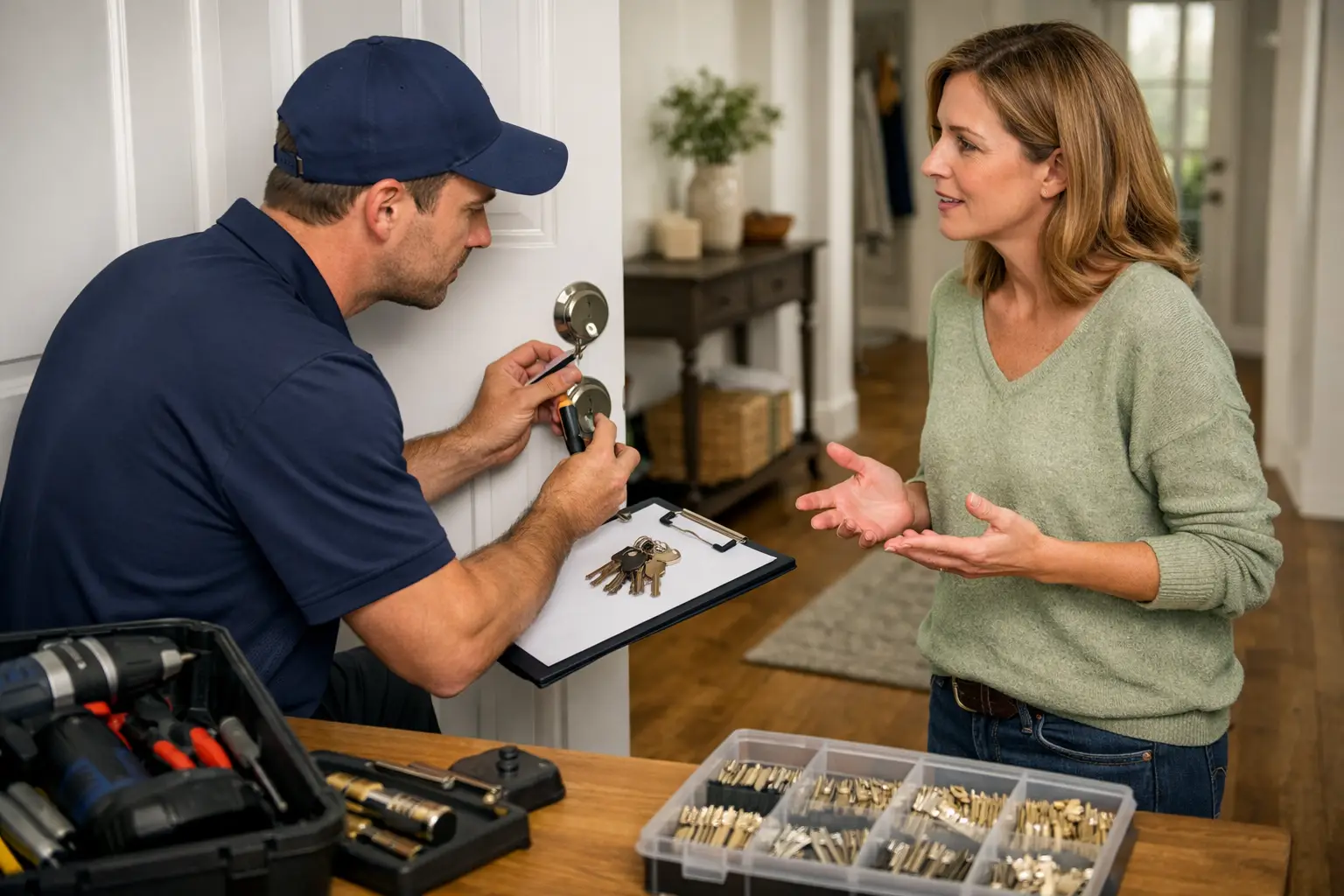
A key can keep working long after you have lost track of who has a copy. That is the real reason homeowners, landlords, and business owners ask, when should locks be rekeyed? Rekeying restores control over access without automatically replacing every lock on the property.
For Sacramento-area properties, rekeying is often a practical response to a move, tenant turnover, employee change, lost key, or security concern. It is usually faster and less expensive than replacing working hardware, but it is not the right answer for every lock problem. The condition of the lock, the type of door, and the level of security needed all matter.
What Rekeying Actually Changes
A lock is rekeyed by changing its internal pin configuration so the existing keys no longer operate it. The lock hardware stays on the door, but a new key is created for the new configuration.
This differs from changing locks. Lock replacement means removing the current lock and installing new hardware. Replacement may be necessary when a lock is damaged, outdated, incompatible with your door, or unable to provide the security level you need. Rekeying makes sense when the lock is in good working condition and your main concern is controlling who can enter.
For many residential and commercial properties, rekeying can also put several compatible locks on one key. That can simplify access for a homeowner, manager, or authorized employee while ensuring old keys no longer work.
When Should Locks Be Rekeyed After a Move?
Rekey locks as soon as possible after moving into a home, condo, apartment, office, or retail space. Even if the previous owner or tenant hands over every key they have, there is no reliable way to know whether copies were made for family members, neighbors, contractors, cleaners, former employees, or vendors.
This applies to more than the front door. Consider exterior side doors, garage entry doors, gates, mailbox locks, storage rooms, and any interior area that holds tools, records, inventory, or valuables. A new property is one of the clearest cases for rekeying because it establishes a known starting point for access.
Buyers sometimes delay this service while handling moving expenses. That can be understandable, but it leaves an unnecessary gap in security. If the locks are functional, rekeying them early is generally a more cost-conscious option than waiting until there is a problem.
Rekey After Lost, Stolen, or Unreturned Keys
A missing key does not always mean someone will use it. The risk depends on where it was lost and whether it can be connected to your property.
If a house key was lost while carrying identification with your address, rekeying should be treated as a priority. The same is true if keys were stolen from a purse, vehicle, work bag, lockbox, or location where the property can be identified. A thief does not need to force a door if they have a working key.
Unreturned keys deserve the same attention. If a former roommate, tenant, employee, contractor, caregiver, or vendor still has a key, rekeying is usually the cleanest way to end access. Asking for keys back is still worthwhile, but it does not confirm that duplicates do not exist.
For businesses, have a clear key return process during offboarding. Recover physical keys, access cards, alarm codes, and garage remotes, then rekey or change access credentials when the role involved sensitive areas or master keys.
Tenant Turnover Is a Strong Reason to Rekey
Rental property turnover creates repeated key-control issues. A prior tenant may have given copies to guests, relatives, dog walkers, maintenance contacts, or roommates. Even a responsible tenant may not remember every duplicate that was made during a long lease.
Landlords and property managers should review their rekeying policy between occupants. Local requirements, lease terms, and property type can affect the exact process, so it is wise to use a consistent procedure and document it. At a minimum, rekey exterior doors and any storage, garage, or shared-access locks assigned to that unit.
For multi-unit buildings, keying strategy matters. Rekeying one unit should not accidentally disrupt access to common areas, maintenance rooms, or other units. A qualified locksmith can identify the lock system in place and recommend a controlled approach rather than creating a confusing collection of keys.
Rekeying After an Employee, Vendor, or Access Change
Commercial keys tend to circulate more widely than residential keys. A manager may issue keys to opening staff, shift supervisors, delivery personnel, cleaning crews, maintenance contractors, and temporary workers. Over time, the business can lose track of exactly who has access.
Rekeying is appropriate after an employee with key access leaves, especially if the departure was unexpected or access involved offices, stockrooms, cash areas, server rooms, or restricted inventory. It is also worth considering after a vendor relationship ends or when a master key cannot be accounted for.
Not every personnel change requires a full building rekey. A small office with one exterior key may need a straightforward rekey, while a larger facility may need targeted changes to specific doors. The goal is proportionate security: protect the areas affected without creating needless cost or disruption.
Rekey If You Are Unsure Who Has a Key
Sometimes there is no single incident. You may simply realize that the key situation has become unclear. Perhaps you have lived in the home for years, handed out spare keys, changed roommates, hired service providers, or bought a property with an old lockbox still in use.
That uncertainty is enough reason to rekey. Security decisions do not need to wait for a break-in or a confirmed threat. If you cannot confidently name the people who have working keys, your lock system is no longer fully under your control.
This is also a good time to review how spare keys are stored. Hiding one under a mat, planter, or decorative rock is easy for others to anticipate. Give a spare to a trusted person, use a secure key storage option, or choose a lock solution that better fits your access needs.
When Rekeying Is Not Enough
Rekeying changes who can use a lock, but it does not repair worn hardware or improve a weak door. Replace the lock instead when it sticks, turns loosely, has visible damage, fails to latch correctly, or shows signs of attempted forced entry.
You may also need replacement if you want to upgrade from basic hardware to a higher-security deadbolt, keypad lock, smart lock, panic hardware, or a commercial-grade access system. Older locks may be difficult to rekey if parts are unavailable or if the lock has been heavily worn over time.
Door strength matters too. A quality deadbolt is only one part of the system. A weak strike plate, short screws, loose hinges, damaged frame, or poorly aligned door can undermine security even when the lock itself is newly rekeyed. If a door is difficult to close or the bolt does not fully extend, address that issue promptly.
How Often Should You Rekey Locks?
There is no universal schedule for every property. Homeowners do not necessarily need annual rekeying if key control is clear and no circumstances have changed. The better rule is event-based: rekey when access changes, keys go missing, or you no longer know who may have a copy.
Businesses and rental properties may need more frequent reviews because keys change hands more often. For these settings, a written key-control policy can prevent confusion. Record who receives keys, how many are issued, what doors they open, and when they are returned.
If you are considering rekeying in Sacramento, Roseville, Folsom, Elk Grove, or nearby communities, ZM Locksmith can assess whether your existing locks can be rekeyed, identify hardware that should be replaced, and help restore controlled access without unnecessary work.
A working lock is only as secure as the keys you can account for. When there is doubt, rekeying is a practical way to make the next key in the lock one you can trust.