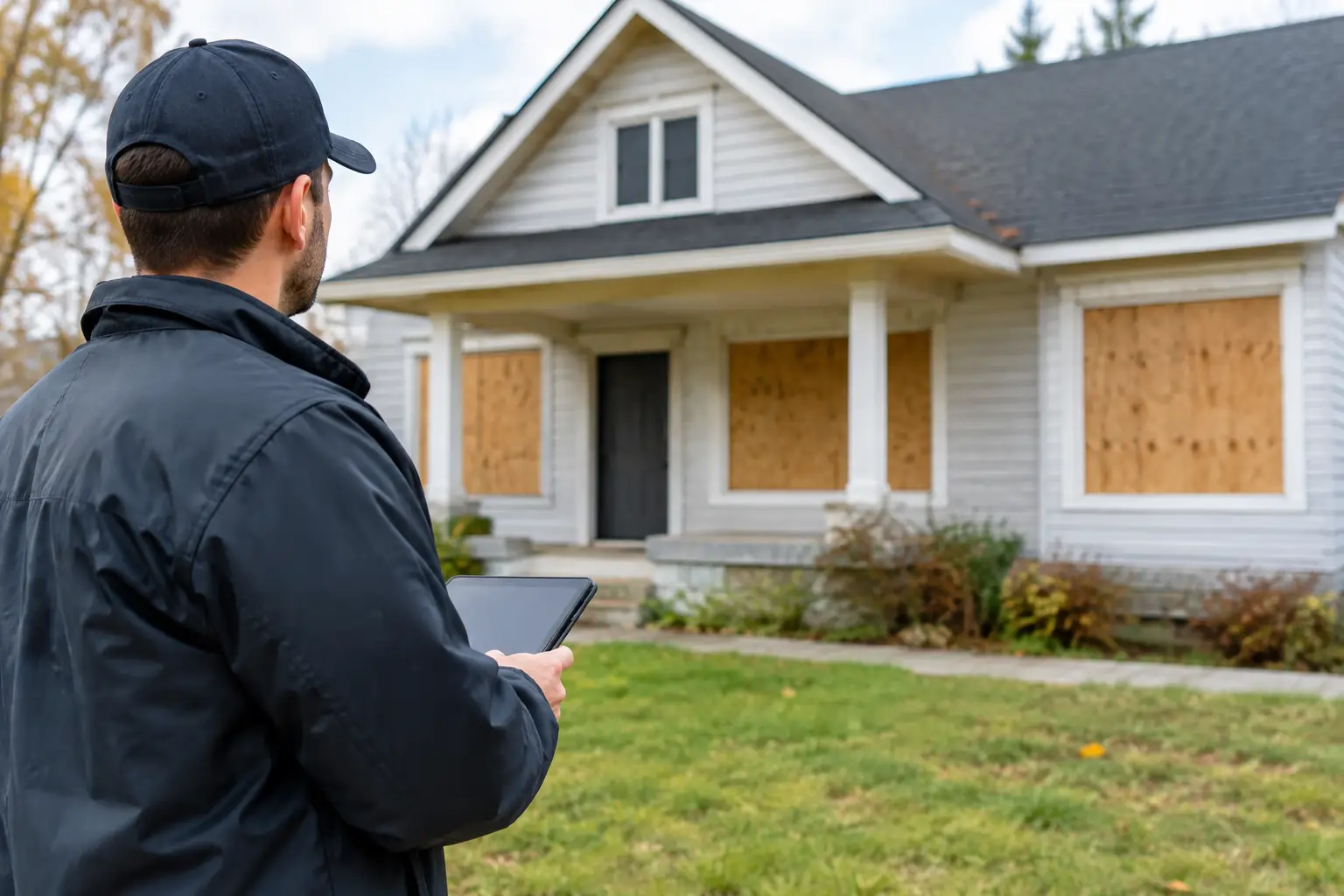
A vacant house, rental, storefront, or office can become a target much faster than most owners expect. A piled-up flyer, dark entryway, or old lock tells people that no one may be watching. Knowing how to secure vacant property means closing those obvious gaps quickly, controlling every key, and creating the appearance of an actively managed building.
Whether the property is between tenants, under renovation, waiting to sell, or temporarily closed, security should begin before it sits empty for its first night. The right approach depends on the building, neighborhood, length of vacancy, and whether contractors or managers need regular access.
Start With a Full Security Assessment
Walk the property as someone looking for an easy way in. Check every exterior door, garage door, sliding door, ground-floor window, gate, storage shed, and utility access point. Do this in daylight and again after dark, when poor lighting and concealed areas become more obvious.
Look for loose strike plates, weak deadbolts, damaged frames, windows that do not lock fully, and doors that can be forced open near the latch. A lock can be in working condition but still offer poor protection if the frame, screws, or door itself is weak.
Pay attention to signs that the property is vacant. Overflowing mail, neglected landscaping, flyers on the door, and visible empty rooms attract unwanted attention. The goal is not to make a vacant property look occupied at all times. It is to make it clear that someone monitors and maintains it.
How to Secure Vacant Property at Every Entry Point
The first security upgrade should be access control. If prior tenants, employees, contractors, real estate agents, or relatives may have keys, do not assume all copies were returned. Rekeying the existing locks changes the key combination without necessarily replacing the full hardware. It is often the practical choice when the locks are in good shape.
Replace the hardware when locks are worn, damaged, outdated, or not appropriate for the door. Exterior doors should have properly installed deadbolts, reinforced strike plates, and long screws that anchor into the wall framing. For commercial properties, a commercial-grade lever or deadbolt may be needed to handle heavier use and meet building requirements.
Sliding doors deserve special attention. Their factory latches are often not enough on their own. A secondary lock or track bar can prevent the panel from being forced or lifted open. Secure accessible windows as well, especially windows hidden by fencing, shrubs, or side yards.
For a property with several authorized visitors, such as a renovation site or commercial suite, consider a keypad or managed access system. This avoids passing physical keys between people and makes it easier to change entry codes when a project ends. Electronic access is useful, but it still needs a reliable mechanical backup and regular battery checks.
Control Keys, Codes, and Contractor Access
A vacant property often has more access risk from authorized people than from strangers. Keys may have been copied years ago, left with vendors, or handed to former occupants. Create one current access list that identifies who has a key, code, remote, or alarm credential.
Keep physical keys in a controlled location. Do not hide a spare key under a mat, in a fake rock, or above a door frame. Those locations are familiar to anyone looking for quick entry. If a lockbox is necessary for real estate showings or contractors, use a durable unit, limit who receives the code, and change the code after a change in personnel.
For larger buildings, assign access by role. A cleaning crew may need access only during scheduled hours, while a property manager may need full access. Remove permissions immediately when a tenant moves out, an employee leaves, or a contractor completes the work.
Add Visible Deterrents Without Advertising Vacancy
Lighting is one of the simplest ways to reduce concealment around a building. Motion-activated lights work well near entry doors, alleys, side gates, garages, and rear parking areas. Use timers for a few indoor lights if power is active, but avoid a rigid pattern that runs at exactly the same hours every day.
Security cameras can provide useful evidence and allow remote checks, but they are not a replacement for strong locks and regular property visits. Place cameras where they can capture faces and entry activity rather than aiming them only at a large open area. Make sure they have clear sightlines, adequate night coverage, and secure account passwords.
Alarm systems can add another layer of protection, particularly for vacant commercial spaces containing equipment, inventory, or tools. Confirm that alarm contacts work on every protected door and window. If the system sends alerts, make sure the contact information is current and that someone can respond when an alert occurs.
Visible security measures should be balanced with curb appeal. Plywood over every window may discourage forced entry, but it can also loudly announce that a building is empty. In some situations, clear security film, interior window coverings, upgraded locks, lighting, and regular checks are a better fit. For renovation properties with exposed openings, temporary boarding may still be necessary until permanent repairs are complete.
Maintain the Property So It Does Not Look Forgotten
Security is not limited to locks. Routine maintenance reduces both break-in risk and costly damage. Arrange for mail collection or forwarding, remove flyers promptly, keep landscaping trimmed, and clear trash from the property. A maintained exterior signals active oversight.
Check the building on a schedule that makes sense for its risk level. A vacant home in a quiet neighborhood may need weekly checks, while a commercial property with valuable equipment or a history of vandalism may need more frequent visits. During each inspection, check doors, windows, fences, water leaks, power status, alarm panels, and signs of tampering.
Document each visit with notes and photos. This creates a clear record for property management, insurance discussions, and repair planning. It also helps identify small changes, such as a damaged latch or recurring trespassing issue, before they become a major loss.
Protect the Interior From More Than Intruders
Vacant properties can suffer serious damage without a break-in. A water leak, HVAC failure, fire hazard, or burst pipe may go unnoticed for days. If the building will be empty for an extended period, review utilities, thermostat settings, water shutoff options, and fire detection.
Remove valuables, sensitive documents, tools, and portable equipment whenever possible. If items must remain, store them out of sight and secure them in an interior locked room or commercial-grade cabinet. Do not leave ladders, tools, or construction materials outside where they can help someone gain access.
Contact your insurance provider to understand vacancy requirements. Some policies limit coverage after a property has been unoccupied for a certain period, or require documented inspections and specific protective measures. Meeting those conditions can matter just as much as installing a new lock.
When to Call a Locksmith for a Vacant Property
A locksmith can help when you need to rekey multiple locks, replace damaged hardware, repair forced-entry damage, secure a storefront after a tenant leaves, or set up better access control for managers and contractors. This is especially useful after an eviction, break-in, ownership transfer, or employee departure, when key control may be uncertain.
For Sacramento-area owners and managers, ZM Locksmith can assess exterior locks, rekey eligible hardware, repair lock problems, and help restore secure access when time matters. If a door will not lock, a key is missing, or there are signs of attempted entry, address it immediately rather than waiting for the next scheduled inspection.
A vacant property does not have to become an easy opportunity. Secure the access points, keep control of every key and code, and make regular checks part of the management plan. The best time to correct a weak lock or broken latch is while the building is still quiet and the choice is yours.